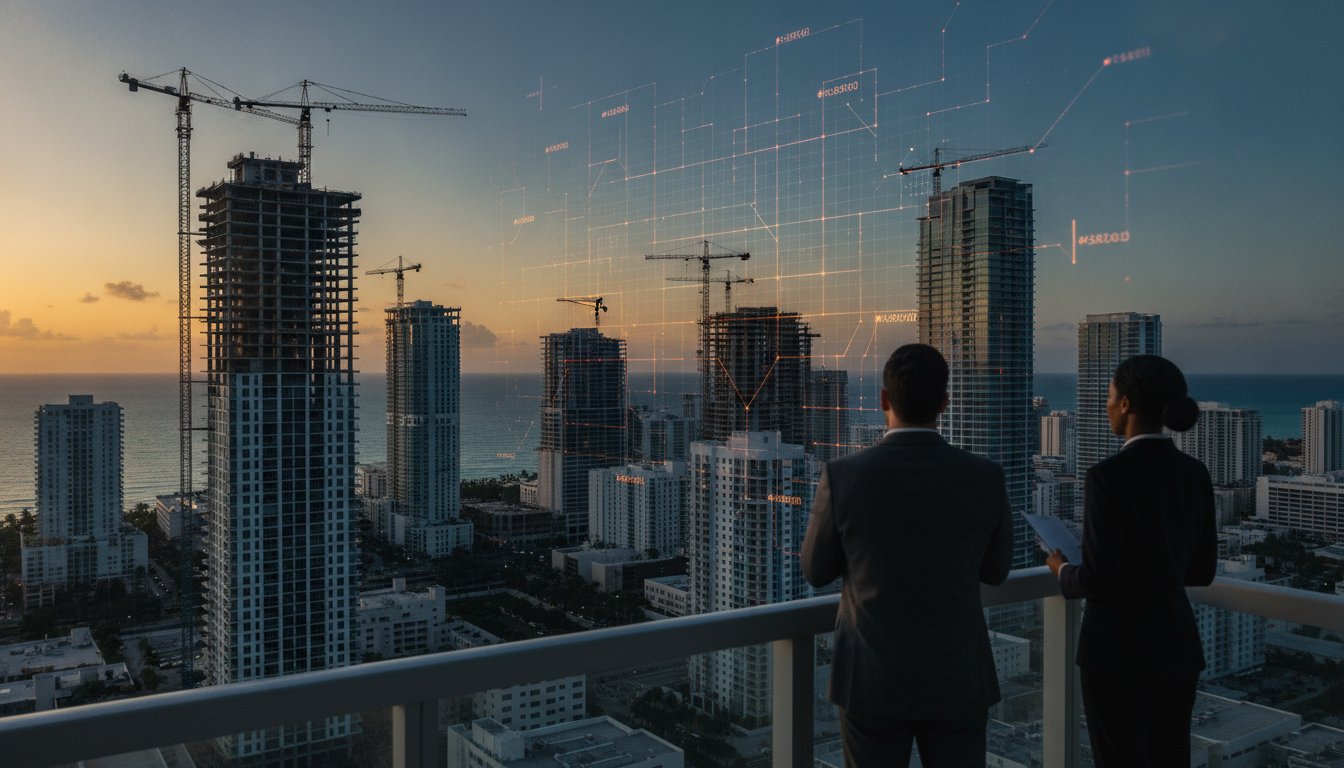
According to the 2025 South Florida Construction Market Report, administrative friction in the permitting phase accounted for an average of 14% of total pre-construction cost overruns. Developers often find that the transition to digital platforms like ePlan and iBuild has introduced new layers of technical scrutiny rather than simplifying the path to approval. You’ve likely experienced how coordination failures between architects and city officials lead to unpredictable timelines that threaten your financial control; it’s a systemic challenge that requires a structured, engineering-led response.
This guide provides a technical roadmap to mastering miami building permits by 2026. We offer a methodology to mitigate regulatory risk and maintain project continuity through rigorous oversight and technical competence. By following this framework, you’ll gain a predictable project timeline and the stability required for large-scale urban development.
We’ll analyze the precise integration of structural engineering requirements with municipal digital workflows. This approach ensures your project moves from initial submission to the successful issuance of the Certificate of Occupancy without the standard delays that plague the Miami-Dade region.
Key Takeaways
- Mastering miami building permits necessitates a sophisticated dual-track strategy to navigate the distinct regulatory requirements of both municipal and regional governing bodies.
- Implementing precise technical submission protocols for the iBuild and ePlan platforms is critical to ensuring seamless integration with the city’s 100% digital permitting ecosystem.
- Developers can mitigate regulatory risk by aligning project entitlements with the Miami 21 Zoning Code, protecting capital from the volatility of municipal approval cycles.
- A structured roadmap from pre-application feasibility to final occupancy provides the technical framework required to maintain project continuity and schedule integrity.
- Professional owner’s representation offers the independent technical oversight necessary to resolve complex municipal conflicts and ensure rigorous compliance with the Florida Building Code.
The Complexity of Miami Building Permits in 2026
In 2026, the process of obtaining miami building permits has evolved into a high-stakes technical exercise rather than a simple administrative filing. These permits serve as formal legal authorizations required for any structural, electrical, or mechanical construction. They ensure all work aligns with the rigorous safety standards of the Florida Building Code. The complexity stems from a dual-layer regulatory framework where municipal requirements frequently intersect with regional Miami-Dade County mandates. For developers, permitting speed directly dictates the financial viability of a project. A delay of 90 days in the current economic climate can reduce total project ROI by 7% or more. The 2026 landscape demands a level of technical precision that leaves no room for the trial-and-error methods used in previous decades.
Jurisdictional Nuances: City vs. County
Identifying the correct authority is the first hurdle in the permitting lifecycle. While a project might be physically located within the City of Miami, it often falls under the concurrent jurisdiction of Miami-Dade Regulatory and Economic Resources (RER). This is particularly true for environmental impacts and utility connections. Specialized departments like the Water and Sewer Department (WASD) and the Department of Environmental Resources Management (DERM) operate on independent timelines. Fire Prevention reviews also require separate technical submittals. Utilizing strategic pre-construction services in Miami allows developers to map these jurisdictional overlaps during the design phase. This proactive mapping prevents late-stage revisions that stall progress and inflate carrying costs.
The Florida Building Code and Local Amendments
South Florida operates under the High Velocity Hurricane Zone (HVHZ) standards. These represent the most rigorous structural requirements in the United States. Recent legislative updates effective in late 2025 and throughout 2026 have introduced more stringent load-bearing and wind-resistance benchmarks for building envelopes. Technical documentation must reflect these 2026 standards from the initial submittal to avoid immediate rejection. Integrating these variables into a site feasibility study Florida ensures that the architectural and engineering plans are compliant before the first submission. This disciplined approach is essential for maintaining the project’s critical path.
- Structural Integrity: Enhanced 2026 standards for reinforced masonry and glazing.
- Environmental Compliance: DERM requirements for flood plain management and drainage.
- Utility Coordination: WASD capacity letters must be secured before final permit issuance.
- Code Updates: Transitioning from the 8th Edition to new 2026 local amendments.
The 2026 permitting environment is unforgiving toward incomplete data. Developers must treat the application process as an engineering challenge. Success depends on the synchronization of municipal codes and county-wide environmental regulations. Without this technical alignment, miami building permits can become a bottleneck that threatens the stability of the entire capital stack.
Understanding the Digital Ecosystem: ePlan and iBuild Portals
The City of Miami finalized its transition to a 100% digital permitting environment in late 2023, mandating all submissions through the iBuild and ePlan (ProjectDox) platforms. This shift eliminated physical paper trails, replacing them with a structured digital workflow designed to increase transparency and accountability. Under City of Miami Ordinance 14279, the role of registered Permit Expediters became strictly codified to ensure that individuals representing developers possess the requisite technical knowledge to interface with these systems. Managing miami building permits requires more than just administrative filing; it demands a rigorous adherence to the RFI (Request for Information) cycle. If an RFI isn’t addressed within the prescribed 30-day window, projects often fall into indefinite review loops, potentially delaying construction commencement by several months.
Navigating the iBuild Portal for Owners
Owners must establish a centralized account within the iBuild portal to maintain oversight of their project portfolio. This dashboard serves as the financial and administrative hub where users track permit status in real-time. It’s vital to distinguish between Easy Permits, which are typically processed for minor repairs or mechanical swaps, and complex master permits required for large-scale vertical developments. All municipal fees and impact payments are settled through this digital interface, providing a clear audit trail for project accounting and ensuring that financial holds don’t stall the technical review process.
Mastering Electronic Plan Review (ePlan)
Concurrent review is the primary advantage of the ePlan system, allowing departments like Zoning, Fire, and Structural to evaluate blueprints simultaneously rather than sequentially. Technical precision is non-negotiable here. Files must adhere to specific naming conventions, such as “001-ARCH-PLAN.pdf”, and utilize secure digital signatures from Florida-licensed professionals. A single incorrectly labeled file or a flattened PDF that obscures metadata can lead to an immediate rejection by the Intake Department during the initial 48-hour screening phase.
Within this technical environment, the Latin Builders Association emphasizes the necessity of professional advocacy to maintain project momentum. An Owner’s Rep should audit every architect’s ePlan upload to ensure compliance before the city’s gatekeepers flag a submission for miami building permits. For developers seeking to optimize their technical workflows, integrating comprehensive engineering oversight ensures that digital submissions meet the city’s stringent 2026 standards. This proactive auditing prevents the common pitfall of “versioning errors,” where outdated plan sets are accidentally re-uploaded, triggering a full restart of the departmental review clock.

Strategic Risk Mitigation: Navigating Zoning and Entitlements
Securing miami building permits represents a sophisticated exercise in risk management rather than a simple administrative task. For developers, the objective is to protect owner capital from the volatility of municipal review cycles and changing regulatory interpretations. The Miami 21 Zoning Code, established as a form-based framework, dictates the viability of high-density projects through its transect-based requirements. In 2026, the technical complexity of these codes requires a proactive stance where architectural intent is verified against zoning constraints long before the first drawing reaches a reviewer’s desk.
Navigating special exceptions often requires managing public hearings and neighborhood notification processes that can extend timelines by 120 to 180 days. Transparency and early engagement with local stakeholders prevent the late-stage friction that frequently halts major developments. Beyond the zoning approval, the recording of the Notice of Commencement in Miami-Dade County records is a critical technical milestone. It establishes the legal point of origin for the project’s construction, protecting the property’s title and defining the priority of lien rights for all contracted parties.
Entitlements and Land Use Strategy
Developers shouldn’t finalize a building permit application until they’ve secured the underlying development rights through a rigorous entitlement process. This phase requires precise coordination with the Planning and Zoning Department to secure necessary warrants, waivers, or variances. Successful projects align these legal entitlements with comprehensive real estate development management services in Miami to ensure the project’s technical specifications don’t conflict with its legal allowances. This integration minimizes the risk of expensive “re-permitting” cycles that occur when site plans and structural designs diverge.
Mitigating Third-Party Vendor Risks
Technical friction is a primary cause of delays in the miami building permits process, particularly when Mechanical, Electrical, and Plumbing (MEP) engineers work without a unified master plan. Siloed permitting occurs when one municipal department approves a plan while another flags a conflict, often because the technical disciplines weren’t cross-referenced during the design phase. This lack of coordination leads to “comment loops” that can stall a project for months. Permit synchronization is the alignment of all technical disciplines to ensure a cohesive municipal review.
- MEP Synchronization: Ensure all load calculations and utility connections match across electrical and plumbing submittals.
- Review Tracking: Monitor the status of each departmental review daily to address comments within 48 hours.
- Conflict Resolution: Identify overlapping requirements between the Florida Building Code and local zoning ordinances early in the design development.
The Permitting Roadmap: From Pre-Construction to Occupancy
Securing miami building permits in the 2026 regulatory environment requires an engineering mindset focused on sequence and technical precision. The process isn’t a simple administrative task; it’s a multi-phased technical progression where each step’s success depends on the accuracy of the preceding one. Developers who treat permitting as a linear checklist often face avoidable delays. A strategic roadmap consists of five distinct phases:
- Phase 1: Pre-application and Feasibility. This stage involves formal pre-application meetings with the City of Miami’s Building Department to identify potential zoning or utility conflicts. Site feasibility verification ensures the proposed density aligns with the latest 2025 zoning amendments.
- Phase 2: Master Permit Submission. Plans enter the Electronic Plan Review (ePlan) system for concurrent review. Structural, fire, mechanical, and plumbing departments evaluate the documents simultaneously to ensure code compliance.
- Phase 3: RFI and Technical Revisions. Managing the Request for Information (RFI) process is critical. Technical revisions must be uploaded promptly to the digital portal to maintain the project’s position in the review queue.
- Phase 4: Issuance and Notice of Commencement. Once the master permit is approved, the ‘Notice of Commencement’ must be recorded with the Miami-Dade County Clerk of Courts. It’s a legal prerequisite for any physical site work or inspections.
- Phase 5: Inspections and Occupancy. This final phase moves through a series of mandatory inspections, leading to the Temporary Certificate of Occupancy (TCO) and, eventually, the Final CO.
The Critical Path to Permit Issuance
Identifying long-lead items early prevents project stagnation. Approvals from the Department of Environmental Resources Management (DERM) often take 45 to 60 days; these must be initiated well before the master permit submission. These timelines directly impact construction bidding in Florida, as contractors won’t commit to fixed pricing without a high degree of certainty regarding the permit status. Developers can expedite reviews by utilizing Florida Statute 553.791, which allows for the use of Private Providers for plan review and inspections. Municipal ‘Small Business Clinics’ also offer specialized assistance for qualifying projects under $50,000, though larger developments require more robust engineering oversight.
Close-out and the Certificate of Occupancy
The transition from construction to operation is a technical hurdle. Miami-Dade County’s requirements for a Final Inspection are rigorous, demanding proof of all final electrical and life-safety sign-offs. A 2025 industry audit indicated that 18% of project delays occur during this close-out phase due to incomplete lien releases. Developers must ensure that all subcontractors have provided final waivers before the county issues the final Certificate of Occupancy. Furthermore, the transition from a shell permit to tenant improvement (TI) permits must be coordinated to ensure that interior build-outs don’t compromise the integrity of the master permit’s life-safety systems. Precision in this final stage protects the asset’s valuation and ensures a seamless handover.
Professional Owner’s Representation in Miami Construction
A General Contractor manages the site, but they don’t always have the objective distance required to oversee the complex timeline of miami building permits. FALKE Atlantic provides the independent technical oversight necessary to protect the owner’s capital. We act as the primary negotiator with municipal authorities, resolving conflicts before they escalate into costly work stoppages or structural revisions. Our engineers ensure that the project remains aligned with the original pro forma, maintaining strict financial transparency during the pre-construction phase.
In late 2024, our firm managed a 25,000-square-foot high-end retail project in the Miami Design District. The project faced a 14-week delay due to conflicting MEP (Mechanical, Electrical, and Plumbing) requirements from the city. By restructuring the submission strategy and conducting direct technical reviews with department heads, we reduced the approval cycle to 14 days. This 12-week acceleration allowed the developer to meet tenant delivery dates and avoid $580,000 in potential penalties.
The FALKE Methodology for Permitting
We integrate the acquisition of miami building permits into a rigorous four-phase project management framework. This system treats permitting as a critical engineering milestone rather than an administrative task. We act as the strategic bridge between the design team and the Building Department. A Miami owner’s representative ensures that municipal requirements don’t lead to scope creep or unnecessary design additions that inflate the budget. We verify that every consultant response to city comments is technically sound and cost-effective.
- Phase 1: Pre-design feasibility and zoning analysis.
- Phase 2: Coordinated permit submittal management.
- Phase 3: Real-time conflict resolution with municipal reviewers.
- Phase 4: Final permit issuance and contractor mobilization.
Securing Your Development’s Future
The long-term value of a Miami asset depends on a clean permitting history. Incomplete records or unclosed permits can reduce asset valuation by 15% during a future sale or refinancing event. We prioritize day-one compliance with Florida’s 40/50-year recertification standards. This means we document every structural and electrical component during the initial build to simplify future inspections. We conclude every project with a disciplined construction phase management in Florida approach. This ensures that the final Certificate of Occupancy is backed by a complete, auditable trail of engineering data, protecting the developer’s liability and the building’s market position.
Optimizing Project Velocity in the 2026 Miami Regulatory Landscape
The integration of the ePlan and iBuild digital ecosystems has fundamentally altered the technical requirements for obtaining miami building permits. Success in the current market requires a rigorous adherence to the Miami 21 zoning code and the specific mandates of the Florida Building Code, as even minor submittal discrepancies trigger cascading delays. It’s essential for institutional developers to transition from reactive problem-solving toward a structured methodology of preemptive risk mitigation that spans the entire lifecycle from pre-construction to final occupancy. FALKE Atlantic applies this level of engineering precision to every mandate, leveraging technical experience gained from high-profile projects such as the Prada Design District. Our team maintains a disciplined focus on compliance and structural integrity, ensuring that complex industrial and commercial systems meet every municipal standard. By internalizing these regulatory variables, we provide the stability necessary for large-scale capital investments to reach completion. Secure your Miami project’s timeline with FALKE Atlantic’s expert Owner’s Representation. We look forward to bringing this level of technical certainty to your next development.
Frequently Asked Questions
How long does it typically take to get a building permit in the City of Miami?
Approval timelines for miami building permits typically range from 12 to 24 weeks for complex commercial developments. Residential minor permits might take 30 to 45 business days. These durations depend on the technical accuracy of the initial submittal and the current volume within the Building Department’s electronic review queue. Precise documentation reduces the likelihood of multiple review cycles, which is the primary cause of project delays.
Do I need a separate permit for interior renovations in Miami-Dade County?
You must obtain a specific permit for interior renovations if the scope involves structural modifications, electrical upgrades, or plumbing rerouting. Miami-Dade County Code Section 8-1 mandates these permits to ensure life-safety standards are met. Cosmetic changes like painting or flooring often fall under the “No Permit Required” category, but any work affecting the building’s core systems requires formal authorization and technical inspection.
What is the difference between a master permit and a trade permit?
A master permit serves as the primary authorization for the entire project’s scope, while trade permits cover specialized technical disciplines like electrical, plumbing, or mechanical work. The master permit holder, usually the general contractor, must ensure all subsidiary trade permits link correctly to the master file. This hierarchical structure allows the Building Department to track inspections across different engineering domains simultaneously, ensuring the project’s structural integrity.
Can I start construction in Miami while my permit is still in review?
Construction cannot legally commence until the City of Miami issues a hard-copy permit or a digital “Approved” status. Executing work during the review phase results in a “Work Without Permit” violation, which carries a fine equal to double the permit fee. Developers can mitigate delays by applying for phased permits or foundation-only approvals to begin site preparation while the full vertical design remains under technical review.
What happens if my building permit application is denied by the City of Miami?
If an application is denied, the Building Department issues a list of “Comments” or “Disapprovals” detailing specific code deficiencies. You have 180 days to submit revised engineering drawings that address these technical discrepancies without incurring new application fees. Failure to resolve these issues within the prescribed timeframe leads to the expiration of the application, requiring a full restart of the submittal process and additional administrative costs.
How much are building permit fees in Miami-Dade for commercial projects?
Miami-Dade County calculates commercial permit fees based on a percentage of the total project valuation, typically ranging from 0.50% to 0.85%. For example, a project valued at $1,000,000 might incur a base fee of $8,500 plus mandatory State of Florida surcharges and municipal impact fees. These financial requirements must be settled before the final permit issuance to avoid administrative holds on the project’s commencement.
Is a permit expediter required for projects in the Miami Design District?
While the City of Miami doesn’t legally mandate an expediter, complex projects in the Miami Design District benefit from specialized coordination to manage the intricate zoning requirements. Expediters act as technical liaisons between the design team and city reviewers, ensuring that miami building permits move through the 14 potential review departments without administrative friction. Their role is critical for maintaining the project’s critical path in high-density urban zones.
How do I track the status of my Miami building permit online?
You can track permit progress through the “iBuild Miami” online portal or the Miami-Dade County Building Permit Search engine using your assigned process number. These platforms provide real-time data on which departments have approved the plans and which require further technical clarification. Monitoring these digital dashboards daily allows project managers to identify bottlenecks and deploy engineering corrections immediately, ensuring the project stays on its technical schedule.