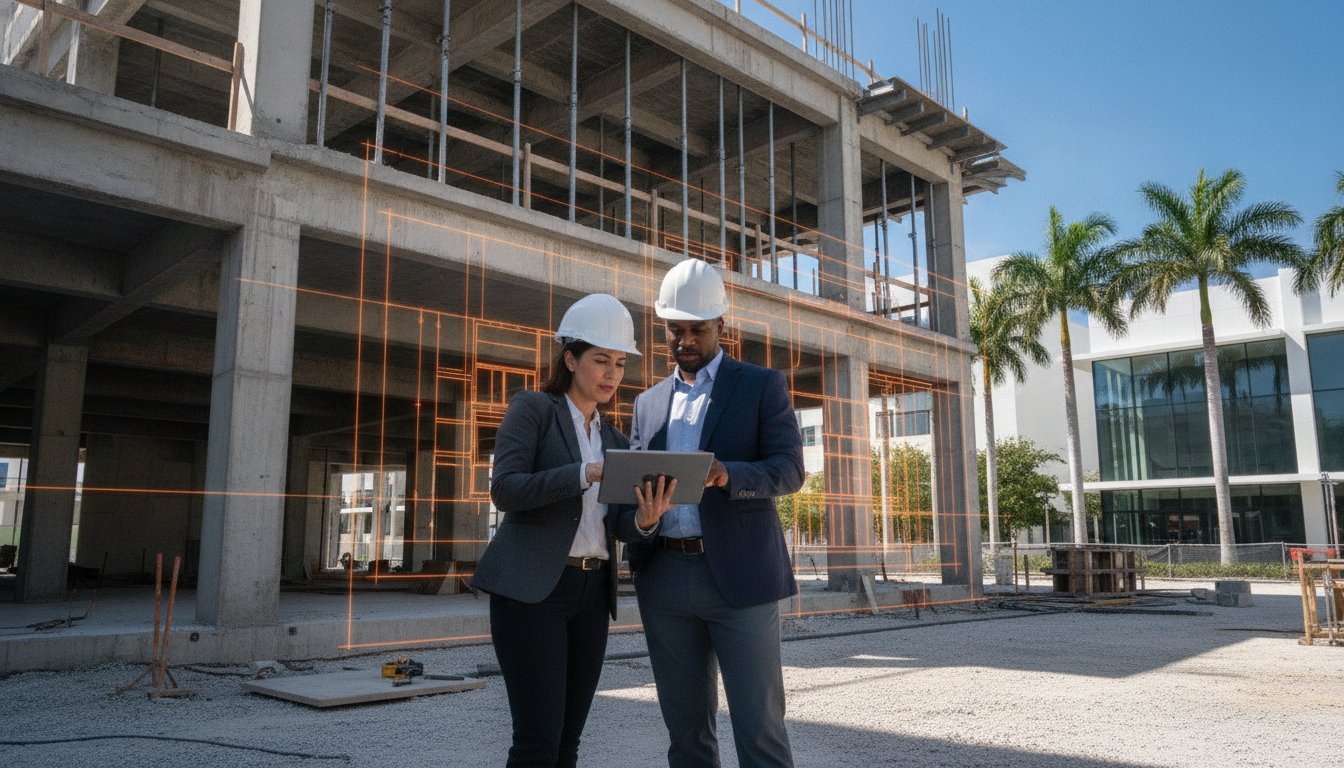
For Broward County HOA boards, the era of managing multi-million dollar capital improvements with only a property manager and a general contractor has officially ended. Engaging a professional owner’s representative for HOA projects in Broward County is no longer a luxury; it’s a necessary fiduciary shield against the escalating technical complexities of the 2026 regulatory landscape. You’ve likely realized that the rigorous demands of Structural Integrity Reserve Studies and the impending 9th Edition of the Florida Building Code require a level of oversight that exceeds typical administrative duties. The burden of preventing uncontrolled change orders while ensuring structural compliance often leads to board member burnout and significant legal exposure.
We understand that your primary objective is to execute essential repairs without compromising the association’s financial stability or its long-term liability profile. This guide provides the strategic framework required to navigate Broward’s demanding construction environment with professional precision. You’ll learn how structured oversight protects your budget, ensures strict adherence to updated building codes, and minimizes the operational disruptions that often plague large-scale residential projects. By the end of this article, you’ll have a clear roadmap for managing complex improvements with the technical competence your residents expect.
Key Takeaways
- Define the professional fiduciary role as the critical link between volunteer board governance and the complex technical execution of capital improvements.
- Identify how an owner’s representative for HOA projects Broward County protects association reserve funds through rigorous invoice auditing and the mitigation of unmanaged change orders.
- Clarify the reporting structures and contractual obligations that distinguish an owner’s representative from a project manager to ensure the association’s interests remain the primary focus.
- Navigate the transition from Structural Integrity Reserve Study (SIRS) findings to active repair phases while maintaining compliance with Florida’s 2026 milestone inspection mandates.
- Learn a disciplined four-phase methodology for managing the lifecycle of a project, beginning with aligning a board’s vision with financial and technical feasibility.
The Role of an Owner’s Representative in Broward County HOA Projects
The execution of large-scale capital improvements within a community association environment requires more than simple oversight. It demands a specialized fiduciary role. An owner’s representative for HOA projects Broward County serves as the board’s technical extension, specifically tasked with protecting the association’s interests against the inherent risks of the construction industry. While board members possess the authority to make decisions, they often lack the technical depth required to audit complex schedules or verify the structural integrity of specialized field reports. This professional gap is where the owner’s representative operates, ensuring that every dollar spent aligns with the long-term health of the asset.
Transparency remains a frequent point of failure in high-stakes renovations. Without a professional advocate, boards are often left to rely on the self-reporting of contractors whose interests are naturally aligned with their own profit margins. A representative establishes a system of checks and balances that ensures all project data is verified and documented. This structured approach to communication creates a clear audit trail, which is essential for maintaining the board’s fiduciary integrity and resident confidence throughout the project’s lifecycle.
Acting as the Board’s Professional Advocate
Maintaining the equilibrium between budget, schedule, and quality requires a disciplined application of construction management principles. Contractors prioritize their own production cycles, which can lead to a degradation of quality or unauthorized cost escalations if left unmonitored. The representative translates these technical complexities into actionable intelligence. It’s their job to filter out the noise and provide the board with the facts they need to make decisions. By assuming the operational burden of vendor coordination, the representative mitigates the emotional fatigue that often leads to board member turnover during high-stakes renovations. They don’t just manage the project; they protect the people responsible for it.
The Value of Local Broward Expertise
Success in South Florida requires a granular understanding of the Broward County Board of Rules and Appeals (BORA) standards. These regulations often exceed baseline state requirements, particularly regarding wind-load specifications and structural hardening for coastal properties. A qualified owner’s representative for HOA projects Broward County understands the local labor market dynamics. They can distinguish between reputable South Florida sub-contractors and those lacking the capacity for high-density residential work. Whether the project is located in Fort Lauderdale or Hollywood, coordinating with municipal building departments is a logistical challenge that requires established professional relationships. This local presence ensures that permitting delays don’t derail the project’s critical path or result in costly stop-work orders.
Fiduciary Protection: Why Broward HOAs Require Professional Oversight
Board members operate under a strict fiduciary standard that requires them to act in the best interest of the association. This duty has become significantly more complex following the legislative response to the Champlain Towers tragedy. With the state now mandating milestone inspections and SIRS, the financial stakes for structural maintenance have reached an all-time high. Associations are prohibited from waiving or underfunding reserves for structural components in budgets adopted after December 31, 2024. An owner’s representative for HOA projects Broward County provides the technical validation necessary to ensure these mandated funds are deployed efficiently and legally.
Unmanaged change orders represent the single greatest threat to an association’s financial stability during large-scale renovations. Without professional oversight, “unforeseen conditions” often become a catalyst for scope creep that can exhaust contingency funds in weeks. A professional representative interrogates every change order request, verifying the necessity of the work and the accuracy of the pricing against the original contract. This level of scrutiny ensures that the project remains within the parameters defined by the board’s approved budget.
Financial Control and Audit Protocols
Technical management of the project’s ledger involves more than just approving checks. It requires a rigorous validation of contractor pay applications to ensure the association only pays for work that is 100% complete and verified. The representative manages the collection of lien waivers from all sub-contractors and material suppliers, which is a critical step in preventing the association from facing double-payment liability. This process is supported by a disciplined contingency management plan where any expenditure beyond the baseline requires formal board authorization. Strict budget oversight identifies financial discrepancies early, ensuring the association avoids the sudden special assessments that typically result from unmonitored project escalations.
Risk Mitigation and Liability Transfer
Protecting the association involves a comprehensive transfer of risk to the vendors performing the work. A qualified owner’s representative for HOA projects Broward County verifies that every vendor maintains active insurance certificates and performance bonds that meet the association’s specific requirements. They also ensure that onsite safety protocols adhere to both OSHA standards and Broward-specific site regulations, which are particularly stringent for high-density residential zones. By coordinating third-party inspections to validate structural work before any payment is released, the representative creates a technical audit trail that protects the board from future claims of negligence. For boards seeking to institutionalize these protections, engaging professional construction phase management provides the necessary oversight to secure the association’s physical and financial assets.

Owner’s Representative vs. Project Manager: Understanding the Difference
Terminology in the South Florida construction sector often creates a dangerous ambiguity regarding professional accountability. A Project Manager (PM) employed by a general contractor is contractually obligated to the contractor’s profitability and production schedule. Their primary objective is the efficient execution of the scope defined in their employer’s contract. Conversely, an owner’s representative for HOA projects Broward County operates as a technical fiduciary with a direct reporting line to the board. This distinction is fundamental. The representative possesses the authority to audit the contractor’s PM, ensuring that the association’s long-term interests aren’t sacrificed for short-term logistical convenience.
A contractor’s PM cannot provide the unbiased quality control required for high-stakes renovations. Their perspective is inherently limited to the immediate construction phase. The representative, however, focuses on the asset’s entire lifecycle. They evaluate how current installation methods or material substitutions will impact the association’s reserve study and maintenance obligations years into the future. Understanding the Owner’s Representative Miami role within this broader regional context is vital for boards overseeing high-density residential assets. It ensures that every technical decision aligns with the Fiduciary Duties of HOA Board Members, protecting the board from claims of inadequate oversight.
The Reporting Hierarchy in South Florida Construction
The representative establishes a structured communication protocol that centralizes information flow. Instead of the board attempting to manage the architect, engineer, and general contractor individually, the representative oversees these entities simultaneously. This hierarchy prevents the “finger-pointing” that often occurs when design errors conflict with field conditions. By serving as the single point of technical truth, the representative provides the board with verified intelligence rather than filtered reports from vendors with competing interests. This structure is essential for maintaining the project’s critical path and protecting the association’s financial exposure.
Complementing the Property Manager’s Role
Property managers are the backbone of community operations, yet they’re frequently overextended during major capital improvements. The technical gap between administrative management and specialized construction oversight is significant. Property managers are trained in association law and resident relations, not in the forensic analysis of structural concrete repairs or complex MEP system commissioning. The representative fills this technical void. They delineate daily operational concerns from the rigors of construction phase management Florida. This professional synergy allows the property manager to focus on resident quality of life while the representative ensures the technical execution meets the highest industry standards.
Broward Compliance: Milestone Inspections and SIRS Oversight
The legislative framework established by Florida Senate Bill 4-D has fundamentally altered the operational trajectory for condominium associations. In Broward County, where high-density development and coastal exposure are prevalent, the coordination of milestone inspections and Structural Integrity Reserve Studies (SIRS) requires technical management that exceeds standard administrative capabilities. An owner’s representative for HOA projects Broward County ensures that the association moves beyond mere regulatory awareness into a state of active, documented compliance. This professional oversight is particularly critical when navigating the transition from identifying structural deficiencies to executing the complex remediation efforts required by the Florida Building Code.
Navigating Mandatory Structural Inspections
The representative’s role begins with the procurement of qualified structural engineers who possess the specific expertise required for milestone inspections. Once the initial report is filed, the representative develops a phased repair strategy that prioritizes life-safety issues while managing the association’s liquidity. Adhering to Broward County’s strict municipal deadlines is essential. For buildings that reached 30 years of age before July 1, 2022, the deadline was December 31, 2024. Coordinating with municipal building departments from Fort Lauderdale to Hollywood requires a disciplined approach to documentation. The representative manages the submission of engineering reports to ensure they meet local standards for structural recertification. Associations must act decisively to meet these thresholds to avoid significant municipal fines and the potential for increased fiduciary liability.
Strategic Pre-Construction for Compliance Projects
Utilizing pre-construction services miami allows boards to generate accurate cost projections before committing to a general contractor. This phase is vital for bidding compliance-driven repairs, as it ensures the association receives competitive pricing even in a high-demand South Florida market where labor and material costs continue to escalate. An owner’s representative for HOA projects Broward County audits these valuations to ensure the board isn’t over-funding or under-funding based on inaccurate contractor estimates. It’s their responsibility to verify that every structural component identified in the SIRS is budgeted according to professional standards. SIRS implementation is the structured methodology of integrating technical maintenance findings into the association’s mandatory funding schedule to ensure all structural components are fully capitalized according to statutory requirements. A SIRS must include any item with a deferred-maintenance cost exceeding $25,675 for 2026 if its failure affects structural integrity. By the time the 9th Edition of the Florida Building Code is implemented on December 31, 2026, associations with professional oversight will have already institutionalized these compliance protocols.
For boards navigating the complexities of SB 4-D, securing owner’s representation is the most effective way to mitigate technical risk and ensure regulatory compliance.
FALKE Atlantic: A Disciplined Methodology for HOA Success
FALKE Atlantic operates through a structured four-phase methodology designed to eliminate the technical and financial variables that typically compromise capital projects. As a specialized owner’s representative for HOA projects Broward County, our firm provides a comprehensive framework that spans the entire project lifecycle. This systematic approach ensures that every decision aligns with the board’s fiduciary obligations and the long-term preservation of the association’s assets.
Phase 1 focuses on Concept and Feasibility. Before any physical work begins, we align the board’s strategic vision with technical and financial reality. This involves a forensic review of the asset’s condition and the development of a project charter that defines success in measurable terms. In Phase 2, we transition into Pre-Construction. This is the stage where risk is most effectively mitigated through rigorous vendor vetting and the application of real estate development management services. We ensure that the design phase and procurement processes are optimized for the association’s specific constraints.
Phase 3, Execution, involves active onsite oversight and aggressive schedule management. We maintain a constant professional presence to ensure that construction milestones are met without sacrificing quality or safety. Finally, Phase 4 covers Commissioning and Close-out. This phase is often neglected, yet it’s vital for long-term stability. We ensure that all municipal permits are finalized, warranties are properly documented, and the transition back to standard association operations is seamless and fully verified.
Transparency and Financial Control
Our methodology includes a zero-tolerance policy regarding unmanaged change orders. Every technical request from a contractor is audited against the original contract documents to prevent unauthorized cost escalations. We establish clear reporting cadences that provide the board with absolute clarity. We translate complex site data into structured, objective reports for board meetings and resident town halls. This level of transparency protects the association’s long-term asset value and reinforces the board’s standing within the community. By institutionalizing these controls, we ensure that the project remains a professional success rather than a source of financial strain.
Engaging FALKE Atlantic for Your Broward Project
Every association possesses a unique risk profile and specific structural needs. Our initial consultation involves a detailed assessment of your association’s project requirements. We customize the scope of our representation to match the complexity of the task, whether you’re managing localized structural repairs or a multi-phase restoration. As a dedicated owner’s representative for HOA projects Broward County, FALKE Atlantic provides the technical stability required for success in the current South Florida market. Our goal is to provide the professional oversight that allows your board to lead with confidence. Schedule a professional consultation with FALKE Atlantic to secure your association’s future.
Securing Your Association’s Physical and Financial Future
The technical demands of Broward County’s current regulatory environment necessitate a transition from volunteer oversight to professional management. Executing capital improvements without specialized guidance exposes the board to significant fiduciary liability and uncontrolled financial escalations. By establishing a clear distinction between contractor-led execution and professional representation, associations ensure that structural integrity projects meet the highest standards of the Florida Building Code. Engaging a qualified owner’s representative for HOA projects Broward County provides the technical stability required to navigate these high-stakes renovations with absolute precision.
FALKE Atlantic operates as a strategic partner for high-net-worth and corporate developments, applying deep expertise in South Florida regulatory compliance to protect your community’s assets. Our disciplined four-phase project methodology ensures that every stage, from initial feasibility to final close-out, is managed with rigorous attention to detail. This structured approach eliminates operational ambiguity and secures the association’s long-term value. It’s the most reliable way to lead your community with the confidence that comes from professional technical oversight.
Secure your HOA’s investment with FALKE Atlantic’s expert representation.
Frequently Asked Questions
What is the difference between an owner’s rep and a property manager for an HOA?
A property manager focuses on the association’s daily operational administration and resident relations. Their scope involves managing the community’s governing documents, financial reporting, and general maintenance requests. Conversely, an owner’s representative for HOA projects Broward County provides specialized technical oversight for large-scale construction. They manage the specific complexities of the building’s lifecycle, such as structural repairs and mechanical system upgrades, which exceed the typical administrative expertise of community management.
How much does an owner’s representative typically cost in Broward County?
Fee structures for professional representation are typically calculated as a percentage of the total construction cost or as a fixed monthly fee based on the project’s anticipated duration. The specific investment depends on the technical complexity of the work and the level of onsite oversight required by the board. While costs vary across the South Florida market, the expense is generally offset by the representative’s ability to mitigate change orders and prevent costly schedule delays through rigorous contract auditing.
Does an owner’s representative need to be a licensed engineer in Florida?
Florida law does not strictly mandate that an owner’s representative hold a Professional Engineer (PE) license, but technical competence in engineering or construction management is essential. The representative operates in a different capacity than the Engineer of Record (EOR), who is responsible for the design and permitting of structural work. The representative’s role is to provide fiduciary oversight and ensure that the EOR’s specifications are being executed correctly by the general contractor without compromising the association’s budget.
Can our HOA board manage a milestone inspection repair project without a rep?
While a board possesses the legal authority to manage their own projects, doing so significantly increases their exposure to fiduciary liability and technical error. Managing a milestone inspection remediation requires a forensic understanding of structural concrete, waterproofing, and municipal code compliance. Without an owner’s representative for HOA projects Broward County, volunteer board members often find themselves overwhelmed by technical vendor disputes and the administrative burden of tracking complex construction schedules, which can lead to project failure.
At what project value does it make sense to hire an owner’s representative?
Associations typically engage professional representation for projects exceeding $500,000, though the complexity of the work is often a more critical factor than the total dollar amount. Even smaller structural repairs mandated by a Structural Integrity Reserve Study (SIRS) can benefit from oversight if they involve multiple sub-contractors or specialized engineering. If a project has the potential to impact the building’s structural recertification or requires significant draws from the reserve fund, professional representation is a necessary safeguard.
How does an owner’s rep handle disputes between the board and the contractor?
The representative utilizes the contract documents and approved project schedule as the single point of truth to resolve technical or financial disputes. By performing a forensic analysis of the field conditions and the contractor’s performance, they provide an objective assessment that removes the emotional element from the disagreement. This disciplined approach ensures that disputes are settled based on documented facts and industry standards, preventing the work stoppages that often result from unmediated conflicts.
What specific Broward County regulations affect HOA construction projects in 2026?
The implementation of the 9th Edition of the Florida Building Code on December 31, 2026, will introduce more stringent standards for structural hardening and energy efficiency. Associations must also navigate the mandatory milestone inspection deadlines and the requirement to fully fund reserves for structural components identified in their SIRS. These regulations are particularly rigorous for buildings three stories or taller, where failure to document compliance can result in municipal fines and the loss of the building’s certificate of occupancy.
How long does the project close-out process take for a condominium restoration?
The close-out phase typically spans 30 to 90 days following the substantial completion of the physical construction work. This period is dedicated to the finalization of municipal permits, the collection of all manufacturer warranties, and the completion of the final punch list. The representative ensures that all lien waivers are secured from sub-contractors and that the association possesses a complete technical archive of the project, which is vital for future milestone inspections and insurance renewals.