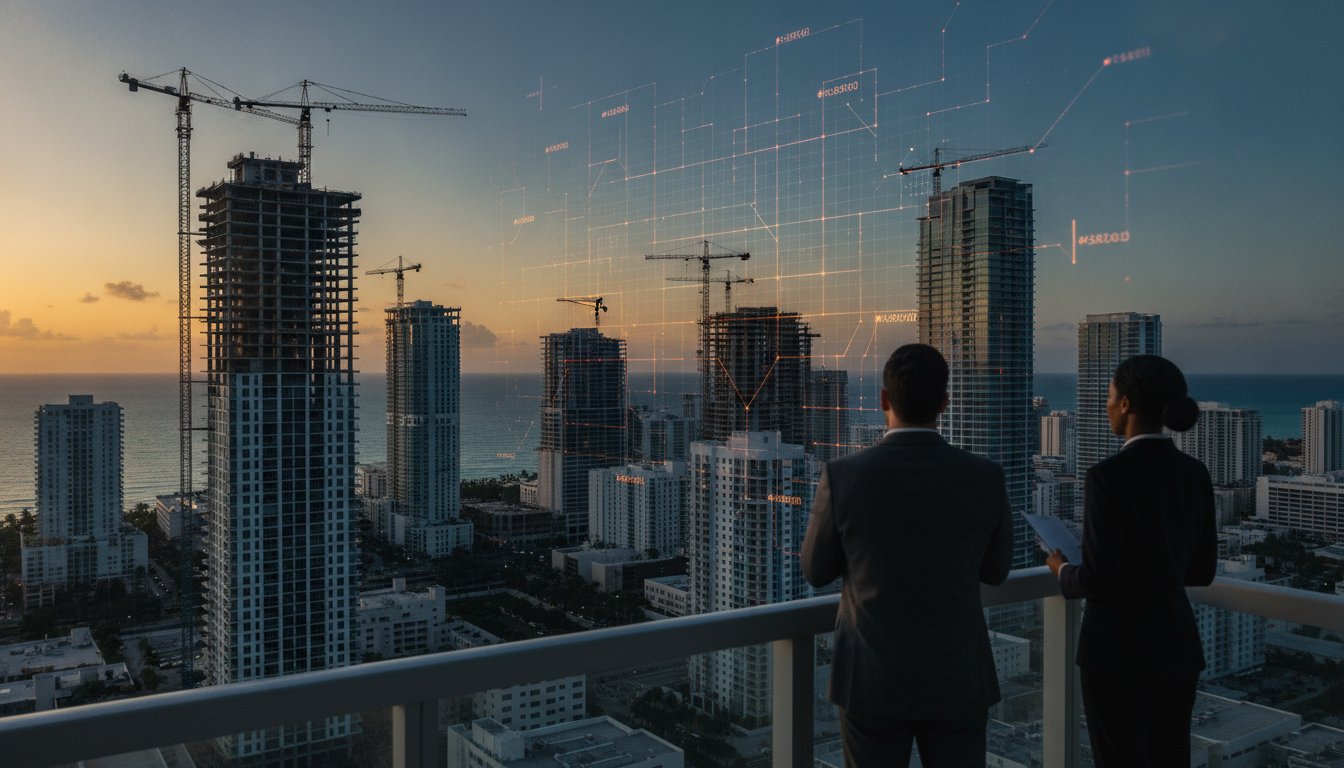
Unmanaged construction projects in South Florida currently face an average budget overrun of 15%, a figure that can prove catastrophic for a flagship luxury development. In a region where construction material costs sit 12% above the national average, the financial margin for error has effectively disappeared. Engaging a specialized owner’s representative for high-end retail Miami Design District developments is the only way to ensure that a global brand’s aesthetic vision survives the transition into a functional, compliant reality. You recognize that the distance between a high-concept design and a Miami-Dade building permit is bridged by technical competence, not just creative intent.
This article details how a fiduciary partner provides the necessary oversight to maintain financial control and brand integrity throughout the project lifecycle. We will explore the impact of the upcoming 9th Edition of the Florida Building Code and the complexities of the Miami 21 zoning code. You’ll discover how professional project management mitigates the risks of shifting tariffs and skilled labor shortages. Our analysis focuses on the technical precision required to align international design teams with local contractors, ensuring your investment is protected from the conceptual phase through final commissioning.
Key Takeaways
- Understand why a specialized owner’s representative for high-end retail Miami Design District projects is critical for translating global brand aesthetics into local technical compliance.
- Learn how a fiduciary partner manages the complex interplay of cost, time, and quality to mitigate the significant financial risks inherent in South Florida’s construction market.
- Gain clarity on navigating the specific permitting hurdles and architectural standards required by the City of Miami and Miami-Dade County.
- Discover a structured four-phase development methodology that ensures operational continuity from pre-construction through to final store commissioning.
The Complexity of High-End Retail Development in the Miami Design District
The Miami Design District represents a unique convergence of high-fashion commerce and architectural innovation, functioning as a meticulously curated enclave rather than a standard municipal neighborhood. For luxury brands, the build-out of a flagship location is an exercise in absolute brand fidelity where deviations from global design standards aren’t permitted. This environment creates a high-stakes scenario where traditional Construction management practices often prove insufficient. The technical rigor required to execute these projects necessitates a specialized owner’s representative for high-end retail Miami Design District developments. This role provides a layer of oversight that protects the owner’s capital from the inherent volatility of the South Florida market. A strategic partner ensures that the vision of international design teams doesn’t collide with the practicalities of local building codes.
Why the Design District is Not a Standard Construction Site
Construction within this district is governed by a strict architectural review board that mandates compliance with specific aesthetic and structural criteria. Unlike typical urban developments, these sites are located within a high-traffic, open-air luxury mall, creating significant logistical constraints for material delivery and debris removal. The technical environment is further complicated by the following requirements:
- Strict adherence to the Miami 21 zoning code and specific High-Velocity Hurricane Zone (HVHZ) requirements.
- Rigorous scheduling of deliveries to avoid peak pedestrian hours and maintain district flow.
- Implementation of high-level dust control and acoustic shielding to preserve the luxury atmosphere.
Standard general contracting often fails to account for these localized pressures. This failure leads to friction with district management and potential project delays that can derail a seasonal opening. The expectation here is one of ‘white-glove’ service, where the construction process itself must reflect the brand’s premium positioning.
The Financial Imperative of Owner’s Representation
An owner’s representative acts as a fiduciary advocate, a role fundamentally distinct from that of a general contractor or an architect. While a contractor focuses on physical execution and an architect on design intent, the representative manages the broader strategic interests of the project owner. They ensure that the ‘triangle’ of cost, time, and quality remains balanced through every phase of development. By integrating an owner’s representative Miami specialist early in the process, owners gain a technical partner capable of auditing change orders and validating contractor claims. This level of professional supervision is essential for maintaining financial control in a market where unmanaged projects experience an average budget overrun of 15%. A specialized owner’s representative for high-end retail Miami Design District projects serves as the primary point of stability, ensuring that technical competence leads to predictable financial outcomes.
Defining the Strategic Role of an Owner’s Representative
The strategic oversight of a luxury build-out requires a sophisticated synthesis of engineering precision and fiduciary responsibility. Unlike a general contractor whose primary focus is on-site production, an owner’s representative for high-end retail Miami Design District projects operates as a technical extension of the owner’s executive team. This distinction is vital in an environment where brand identity is non-negotiable. The increasing demand for owner’s representatives highlights a shift toward prioritizing specialized advocacy to manage the ‘triangle’ of cost, time, and quality. A professional representative secures this balance by implementing rigorous vendor pre-qualification and competitive procurement strategies that align with the brand’s global standards.
Transparency is maintained through disciplined financial reporting and real-time project auditing. Every expenditure is validated against the project’s technical specifications, ensuring that the owner’s capital is deployed with maximum efficiency. This level of scrutiny extends to contract negotiations, where the representative identifies and mitigates latent liabilities before they manifest as costly delays. The result is a project structure built on accountability rather than assumptions.
Bridging the Gap Between Global Design and Local Execution
Luxury retail brands often arrive in Miami with design concepts developed by European or international architectural houses. These concepts don’t always account for the specific rigors of the Florida Building Code, particularly the 9th Edition requirements taking effect on December 31, 2026. A specialized owner’s representative translates these global aesthetic requirements into locally compliant engineering solutions. They ensure that high-end materials, often imported from overseas, meet the 160 mph wind load and impact-resistance standards required for the Design District’s High-Velocity Hurricane Zone (HVHZ). Managing this communication flow between global designers and local sub-contractors prevents the technical friction that typically leads to design compromises.
Risk Mitigation and Financial Oversight
Financial volatility in the current market, driven by 50% tariffs on imported steel, aluminum, and cabinetry, necessitates a proactive approach to risk. An owner’s representative for high-end retail Miami Design District developments utilizes detailed pre-construction audits to identify potential cost escalations early. By implementing a structured four-phase methodology, the representative maintains momentum and ensures that the project remains insulated from market fluctuations. Effective construction project management Florida strategies prioritize long-term ROI by preventing change order inflation and ensuring that the final delivery meets the technical benchmarks of a trophy asset. Strategic oversight ensures that the investment remains secure; interested parties may explore our full suite of Owner’s Representation services to understand this integration.
Navigating Technical Landscapes: Permitting and Design District Standards
The administrative phase of a luxury development in South Florida is often the most significant bottleneck for international brands. Navigating the municipal requirements of the City of Miami requires a technical depth that transcends basic project coordination. An owner’s representative for high-end retail Miami Design District projects serves as a fiduciary partner for excellence, orchestrating the alignment between architectural intent and the Florida Building Code. By acting as the primary liaison with municipal officials and permit expediters, the representative ensures that the project doesn’t stall in the administrative queue. This oversight is critical given that average permitting lead times for major developments in Miami-Dade currently range from 180 to 270 days. Expert intervention during this phase isn’t a luxury; it’s a financial necessity to protect the project’s opening date.
Modern luxury retail build-outs must also integrate increasingly complex sustainability standards. For projects exceeding 50,000 square feet, the City of Miami mandates LEED Silver certification. This requirement adds a layer of sustainable engineering and documentation that must be managed from the initial conceptual phase. While some stakeholders view professional representation as an additional cost, the representative’s ability to compress these timelines and mitigate the average 15% budget overrun seen in unmanaged projects provides a quantifiable return on investment. The representative identifies potential code conflicts during the design phase, preventing the need for expensive field modifications during construction.
Miami-Dade Building Codes and Luxury Retail
High-end retail storefronts require specialized glazing systems capable of meeting the High-Velocity Hurricane Zone (HVHZ) standards. These systems are often custom-engineered and require significant lead times for fabrication and testing. Utilizing pre-construction services miami ensures these technical specifications are vetted against the 9th Edition of the Florida Building Code before the procurement phase. This proactive approach is essential when dealing with complex retail layouts that must balance fire safety and occupancy requirements with the brand’s aesthetic desire for open, minimalist spaces. The owner’s representative for high-end retail Miami Design District developments ensures that every technical detail, from smoke evacuation systems to impact-resistant envelopes, is compliant without compromising the design vision.
Managing the Design District Architectural Review
The Miami Design District is governed by specific aesthetic guidelines that require formal presentations to architectural review boards. These boards evaluate how a brand’s facade and interior layout contribute to the district’s reputation as a global architectural enclave. Achieving the level of quality seen in trophy assets, such as the Prada Design District flagship, requires a representative who understands how to present design concepts to local boards for faster approval. They ensure that the ‘white-glove’ expectations for site management are met, maintaining the district’s standards for cleanliness and noise mitigation throughout the build-out. This disciplined management of local expectations is what allows a global brand to integrate seamlessly into Miami’s most prestigious commercial landscape.

A Disciplined Four-Phase Methodology for Luxury Retail Success
The transition from a global design concept to a revenue-generating flagship location requires more than architectural vision; it demands a structured, sequential methodology. For development in the Miami Design District, the lack of a disciplined framework often results in the “90% finished” plateau, where projects stagnate during the final stages of punch-list completion and municipal sign-offs. An owner’s representative for high-end retail Miami Design District projects prevents this stagnation by maintaining technical continuity across the four critical phases of development. This approach ensures that every decision, from the first feasibility study to the final city inspection, serves the ultimate objective: a revenue-ready asset delivered according to the brand’s precise standards. Without this oversight, the final 10% of the project can consume a disproportionate amount of time and capital.
Continuity is the primary defense against the fragmentation that typically occurs between design and execution. When the same fiduciary partner oversees the entire lifecycle, the technical knowledge gained during pre-construction isn’t lost during the transition to the field. This systematic oversight creates a predictable environment where the owner’s financial interests remain the priority. By focusing on the concept of a “revenue-ready” asset, the representative ensures that the store isn’t just physically built, but is operationally compliant and capable of opening its doors to the public, complete with brand-specific collateral and custom packaging from Micro Printing, without administrative delay.
Phase 1 & 2: Concept, Feasibility, and Pre-Construction
Decisions made during the initial 10% of a project’s timeline influence the vast majority of final costs. In the Design District, site feasibility studies must account for the specific architectural rigors and logistical constraints of an active luxury mall environment. During these early phases, the representative assembles a team of engineering and design professionals who possess the specialized expertise required for high-fashion environments. By establishing a rigorous baseline budget and a realistic schedule before construction commences, the project owner is insulated from market volatility. This phase is where the technical and fiduciary foundation of the project is solidified, ensuring that the design intent is both buildable and financially viable.
Phase 3 & 4: Construction Phase Management and Commissioning
Execution requires unrelenting on-site quality control to ensure that the physical build-out mirrors the approved design documents without compromise. This phase involves managing complex sub-contractor relationships and monitoring schedules to prevent the budget overruns common in unmanaged South Florida developments. Our construction phase management florida guide provides a detailed breakdown of these execution steps. The final phase, commissioning, is where the technical integrity of the building is verified. This includes the rigorous testing of specialized lighting arrays, high-efficiency HVAC systems, and sophisticated security protocols. A store is only considered complete when it’s fully operational and compliant with all local safety codes. To ensure your next development meets these exacting standards, consult with our team at FALKE Atlantic Corporation to secure expert representation.
FALKE Atlantic Corporation: Your Fiduciary Partner for Design District Excellence
FALKE Atlantic Corporation operates as a specialized boutique consultancy, providing a technical and fiduciary anchor for complex developments in South Florida. In a market where skilled labor costs are projected to increase by 12% over the next 18 months, the necessity for unwavering financial control is paramount. As an owner’s representative for high-end retail Miami Design District projects, we act as the primary safeguard for your capital, ensuring that every phase of development is audited for technical precision and cost-efficiency. Our experience across the hospitality and high-end retail sectors provides us with a unique understanding of the high-stakes environments where brand integrity is the primary metric of success. We don’t rely on emotional persuasion; we rely on the strength of our technical competence and a commitment to total transparency.
The FALKE Atlantic Corporation Difference in Luxury Project Management
A disciplined methodology is the only viable path for managing high-net-worth developments in today’s volatile landscape. Our approach focuses on delivering high-quality, revenue-ready assets that meet the technical benchmarks of the luxury market without the standard delays associated with unmanaged sites. Having a strategic partner who understands commercial project management miami allows owners to navigate the complex interplay of rising material costs and strict architectural standards. We ensure that the final phase of the project is managed with the same rigor as the initial feasibility study. A revenue-ready asset means the space is fully commissioned, with all lighting, HVAC, and security systems verified, allowing for a seamless transition to the brand’s operational team.
Next Steps for Your Miami Flagship
Initiating a Miami flagship project requires early engagement within the real estate development management services lifecycle. Decisions made during the conceptual phase dictate the financial trajectory of the entire build-out. We offer comprehensive feasibility reviews for Design District sites, evaluating the structural, logistical, and municipal challenges specific to the district. Protecting your retail investment begins with a technical consultation that establishes a clear, accountable project structure. To ensure your development’s success and ensure your asset is delivered according to the highest professional standards, Consult with FALKE Atlantic Corporation today.
Securing Technical and Financial Success in the Design District
The realization of a flagship presence in the Miami Design District depends on a synthesis of technical precision and unwavering fiduciary discipline. We have analyzed how the complexity of local building codes and the rigor of architectural review boards demand oversight that transcends standard construction coordination. A specialized owner’s representative for high-end retail Miami Design District developments ensures that a brand’s vision is not compromised by regional regulatory hurdles or market volatility. By implementing a disciplined four-phase methodology, we maintain project momentum and protect the owner’s capital through to final commissioning.
FALKE Atlantic Corporation provides the specialized expertise in Miami-Dade permitting and luxury retail standards necessary to deliver revenue-ready assets on schedule. Our experience with high-net-worth brands allows us to manage complex vendor landscapes while maintaining total transparency through rigorous financial reporting. This technical advocacy is the only way to ensure that your investment is insulated from the risks inherent in the South Florida market. Secure Your Retail Investment with FALKE Atlantic Corporation to ensure your next flagship reflects the highest professional standards. We look forward to establishing a strategic partnership that prioritizes the stability and quality of your development.
Frequently Asked Questions
What is the difference between an owner’s representative and a project manager in Miami retail?
An owner’s representative possesses a fiduciary duty to act in the best interest of the project owner, serving as a technical extension of their executive team. While a project manager often focuses on the tactical execution of a contractor’s specific scope, an owner’s representative for high-end retail Miami Design District projects provides strategic oversight across the entire development lifecycle. This role includes auditing financial expenditures and ensuring that global brand standards are maintained without compromising local technical compliance.
Why is the Miami Design District more difficult to build in than other South Florida areas?
The district is governed by a strict architectural review board and the Miami 21 zoning code, which mandate specific aesthetic and structural criteria. Logistically, the area is a high-traffic, open-air luxury mall that requires “white-glove” site management to minimize noise and dust. These factors, combined with rigorous logistical constraints for material deliveries, require a level of coordination that transcends standard commercial construction practices.
How does an owner’s rep help with Miami-Dade building permits?
Representatives serve as the primary liaison between design teams, municipal officials, and permit expediters to navigate administrative bottlenecks. Given that average permitting lead times in Miami-Dade range from 180 to 270 days, expert oversight is required to prevent delays. By vetting technical documents for compliance with the Florida Building Code before submission, the representative reduces the risk of time-consuming corrections and administrative rejections.
When is the best time to hire an owner’s representative for a retail project?
Engagement should ideally occur during the pre-design or conceptual phase to ensure maximum financial and technical control. Decisions made in the initial 10% of a project’s timeline influence 90% of the final costs. Early involvement allows the representative to conduct site feasibility studies and establish a disciplined baseline budget before significant capital is committed to the development.
Can an owner’s representative help reduce construction costs in high-end retail?
Costs are reduced through proactive risk mitigation, change order audits, and disciplined procurement strategies. Representatives identify potential cost escalations early, which is essential in a market where construction material costs are 12% above the national average. By implementing value engineering that respects brand aesthetics, they ensure the project remains financially viable while maintaining the high-quality finish required for trophy assets.
How do you manage a project if the brand’s design team is based in Europe or NYC?
The representative acts as a local technical translator, bridging the gap between international design intent and South Florida’s specific engineering requirements. They ensure that imported materials and global concepts meet High-Velocity Hurricane Zone (HVHZ) standards and the 160 mph wind load requirements. This local expertise prevents the technical friction that often occurs when global teams are unfamiliar with the 9th Edition of the Florida Building Code.
What are the typical fees for owner’s representation in luxury retail?
Industry data indicates that owner’s representative fees in Miami typically range from 1.5% to 5% of the total project cost. For smaller, highly complex luxury retail build-outs, fees generally fall between 3% and 5%, while larger developments often see rates between 1.5% and 4%. Some firms also offer fixed-fee retainers to provide owners with greater budget predictability throughout the project lifecycle.
How does FALKE Atlantic ensure a project is ‘revenue-ready’?
We prioritize the final commissioning and close-out phases to verify that all technical systems are fully operational for immediate use. This process involves testing specialized lighting, high-efficiency HVAC, and security protocols to ensure they meet both brand standards and municipal safety codes. By managing these final details with technical rigor, we ensure the asset is operationally compliant and ready to generate revenue the moment the doors open.