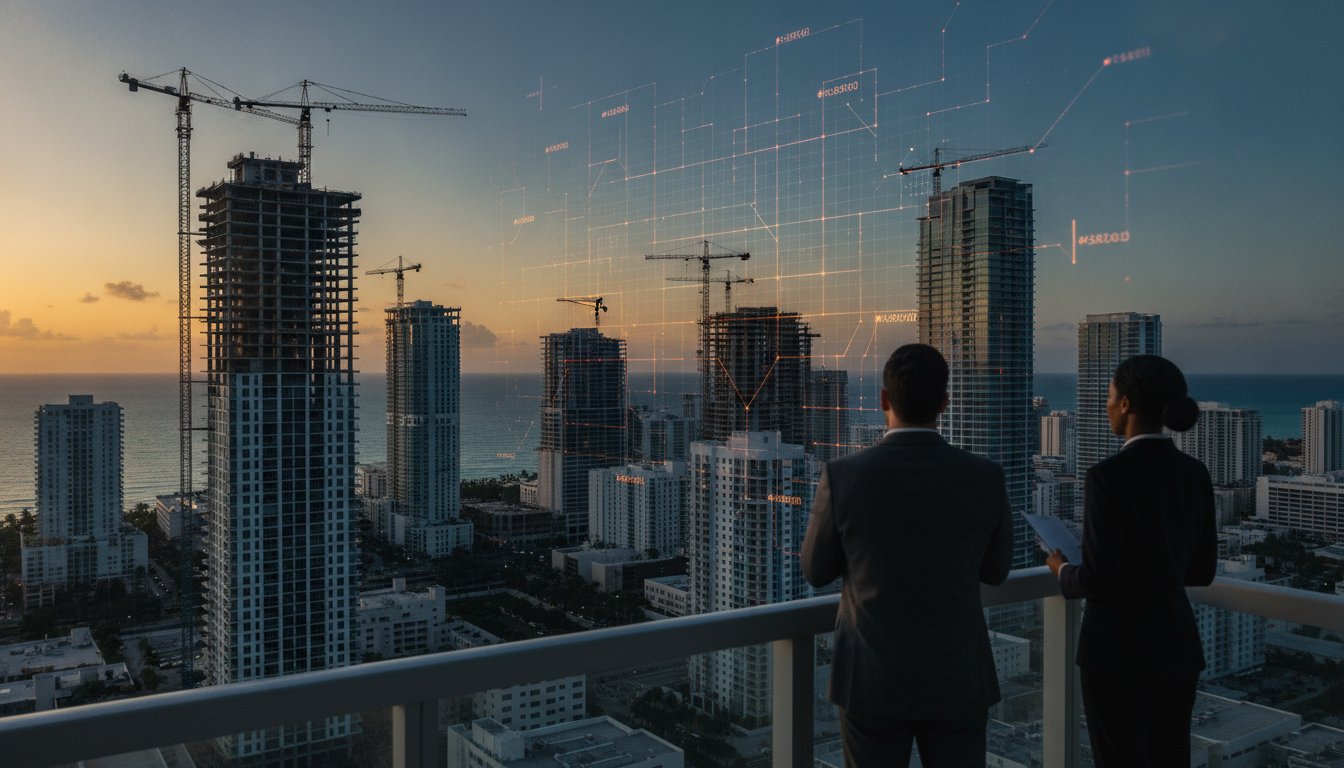
In the high-stakes landscape of Miami’s premiere art district, a standard commercial build-out will almost certainly fail to meet the museum-grade standards required for high-value collections. Engaging an expert owner’s representative for art gallery construction Wynwood is not a luxury; it’s a structural necessity for fiduciary protection and technical precision. Most developers recognize that general contractors, while competent in basic shells, often lack the specialized engineering knowledge required for archival-quality HVAC systems or the complex NRD-1 zoning overlays unique to this neighborhood.
This guide provides a strategic framework to ensure your project remains a high-quality asset while navigating the rigorous demands of the 9th Edition of the Florida Building Code and the Wynwood Design Review Committee. You’ll learn how a disciplined four-phase methodology secures transparent financial reporting and mitigates the risk of schedule delays. We will examine the critical intersection of technical competence and project oversight, providing you with the roadmap to deliver a revenue-ready gallery space that stands as a benchmark of quality in a competitive market.
Key Takeaways
- Understand the specific regulatory complexities of the Wynwood NRD-1 zoning overlay and its implications for museum-grade structural requirements.
- Learn why an owner’s representative for art gallery construction Wynwood is essential for maintaining fiduciary control and preventing technical deficiencies in high-value environments.
- Discover how a disciplined four-phase methodology provides a structured framework for financial transparency and rigorous design team assembly.
- Identify strategies to mitigate common Miami construction risks, such as unpredictable change orders and specialized HVAC system failures.
- Establish a clear roadmap for delivering a revenue-ready gallery space that meets the exacting standards of the global cultural market.
The Evolution of Art Infrastructure in Miami’s Wynwood District
Wynwood’s metamorphosis from a mid-century industrial zone to a global destination for fine art has fundamentally altered the requirements for commercial development. What began as a grassroots movement has matured into a sophisticated real estate market where institutional investors and private collectors demand museum-grade facilities. The Evolution of Art Infrastructure in Miami’s Wynwood District reflects a broader shift toward high-performance adaptive reuse; the aesthetic of the raw warehouse must be maintained without compromising the technical integrity of the building envelope. This balance is particularly precarious in South Florida’s humid climate, where moisture intrusion can jeopardize multi-million dollar collections.
From Industrial Warehouses to Global Art Hub
The adaptive reuse of mid-century concrete structures presents a unique set of engineering challenges. Preserving the industrial character while integrating sophisticated climate control systems requires a deep understanding of thermal bridging and moisture management. Art Basel Miami Beach has elevated global expectations, forcing local developers to prioritize archival-quality environments over simple retail shells. This transition is further complicated by the Wynwood Neighborhood Revitalization District (NRD-1) zoning, which mandates specific ground-floor activations and pedestrian-oriented design. These regulations ensure the district’s character remains intact, yet they add layers of complexity to the permitting and design phases.
In this environment, the role of an owner’s representative for art gallery construction Wynwood becomes a critical component of the project’s risk management strategy. Standard general contractors often lack the specialized background required to manage the installation of high-CRI lighting arrays or the reinforcement of masonry walls for heavy-load art installations. Without expert oversight, projects frequently suffer from technical deficiencies that only become apparent after the art is installed. A dedicated representative ensures that the architectural vision aligns with the rigorous technical standards necessary for fine art preservation.
Why Wynwood Construction Requires Specialized Oversight
The Miami construction landscape in 2026 is defined by labor volatility and the implementation of the 9th Edition of the Florida Building Code. Managing the “Miami construction premium” involves more than just budget tracking; it requires a strategic partner who can verify contractor claims and audit change orders. A local advocate ensures that the project remains revenue-ready for the peak art season, navigating the Wynwood Design Review Committee (WDRC) and the City of Miami’s updated fee schedules. Success in this market is not merely about completion, it’s about the delivery of an asset that meets the exacting standards of the international art community.
Technical precision in art spaces is non-negotiable. While a standard commercial build-out might focus on aesthetics, a gallery requires specialized HVAC systems capable of maintaining precise humidity levels within a one percent tolerance. The complexity of these systems, combined with the structural requirements of the High-Velocity Hurricane Zone (HVHZ), creates a high-risk environment for the uninformed owner. Professional oversight bridges the gap between creative intent and technical execution, providing the stability and quality control necessary to protect the owner’s long-term investment.
Defining the Owner’s Representative for Fine Art Spaces
The distinction between a general contractor and an owner’s representative for art gallery construction Wynwood is fundamental to project stability. While a contractor is responsible for the physical execution of the build, their primary loyalty is naturally tied to their own profit margin and operational schedule. In contrast, the owner’s representative acts as a technical extension of the owner’s office. They provide the necessary friction to prevent value engineering that might compromise museum-grade standards. This role is especially critical when Analyzing Risks in Wynwood Gallery Development, as the failure of a single climate control component can result in catastrophic insurance claims and irreversible damage to inventory.
Fiduciary Duty and Technical Advocacy
An owner’s representative serves as a dedicated fiduciary advocate for the gallery owner, ensuring that every project decision prioritizes the client’s financial and technical interests. This advocacy extends beyond simple oversight; it involves the rigorous management of the “triangle of constraints.” In the context of fine art infrastructure, the balance between budget, schedule, and quality is exceptionally fragile. A representative ensures that cost-saving measures don’t result in “hot spots” in the lighting array or humidity fluctuations that exceed a 2% variance. By maintaining this level of technical discipline, the representative protects the long-term asset value of the property and its contents.
Managing Specialist Art Vendors
The construction of a world-class gallery requires the coordination of highly specialized vendors whose work often falls outside the expertise of a standard commercial contractor. Integrating museum-grade HVAC systems requires more than just mechanical knowledge; it requires an understanding of psychrometrics and archival preservation. The representative manages these specialists to ensure that the lighting designers, security consultants, and climate engineers work in a unified manner. This coordination prevents the aesthetic experience from being marred by visible security sensors or poorly integrated air diffusers. It’s about ensuring the infrastructure serves the art, not the other way around.
Managing these complex interdependencies requires a partner who understands the nuances of the Miami market. For developers seeking this level of disciplined oversight, engaging in professional Project Management and representation is the most effective way to secure a successful outcome. This strategic partnership ensures that the design intent is maintained from the initial feasibility study through the final commissioning of the space. Every dollar spent is audited to ensure it contributes to the delivery of a superior, revenue-ready asset.
Analyzing Risks in Wynwood Gallery Development
Executing a project without an owner’s representative for art gallery construction Wynwood leaves the developer exposed to a cascade of technical and financial liabilities. In a market where property values have appreciated by 130% over the last five years, the margin for error in capital expenditure is virtually non-existent. Risks in this district aren’t limited to simple delays; they encompass complex regulatory hurdles and the potential for systemic contractor default. A professional representative establishes a buffer between the owner’s capital and the volatile Miami labor market, ensuring that technical requirements for fine art preservation aren’t sacrificed for the sake of contractor convenience.
Budget Volatility and Change Order Mitigation
Construction costs for high-end commercial projects in Miami now range from $300 to over $600 per square foot, making financial transparency a prerequisite for project viability. Soft costs, including architectural fees and insurance, typically add another 15% to 30% to the total budget, requiring a disciplined approach to fund allocation. An owner’s representative mitigates change order fraud by implementing a rigorous auditing process for every line item. By vetting contractor bids during the pre-construction phase, the representative identifies hidden costs and “plug numbers” that often lead to budget inflation during the build. This level of oversight protects the gallery owner from the risk of liens and ensures that the final delivery aligns with the initial pro forma.
Navigating Wynwood NRD-1 Zoning and Permitting
The Wynwood Neighborhood Revitalization District (NRD-1) overlay introduces a unique layer of complexity to the standard Miami 21 zoning code. All new developments must undergo a mandatory review by the Wynwood Design Review Committee (WDRC), which evaluates the project’s contribution to the district’s industrial character and pedestrian experience. This process requires precise coordination with the City of Miami Building Department, especially regarding the new fee schedules adopted in April 2026. Failure to account for ground-floor activation requirements or public art mandates can result in significant permitting delays and costly design revisions.
Technical compliance also extends to the High-Velocity Hurricane Zone (HVHZ) provisions of the Florida Building Code. Every exterior component, from impact-resistant glazing to roof attachments, must possess a valid Miami-Dade County Notice of Acceptance (NOA). An owner’s representative manages these technical submissions, ensuring that the building envelope meets the 9th Edition standards scheduled for implementation on December 31, 2026. This proactive management of the permitting pipeline prevents the “stop-work” orders that frequently plague unmanaged projects in South Florida. By securing a stable regulatory path, the representative ensures the gallery is ready for occupancy before the critical art season begins.
The FALKE Methodology: A Four-Phase Approach
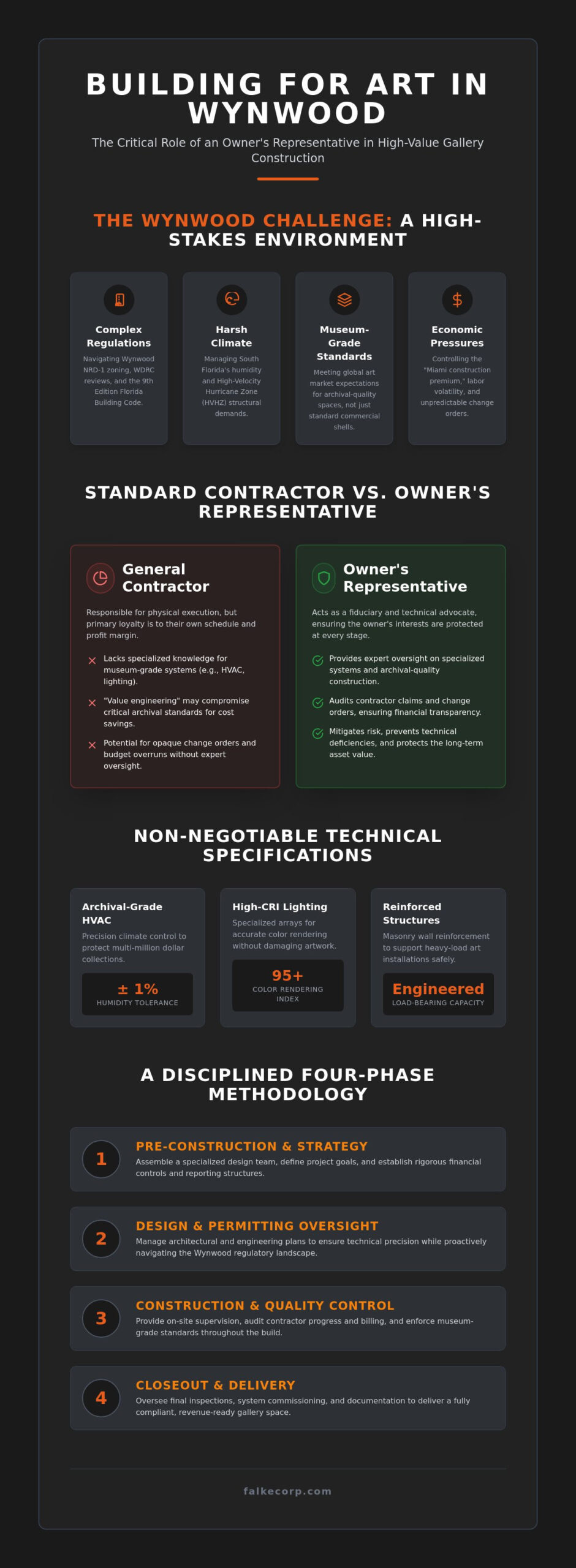
A disciplined approach to capital project delivery is the only way to ensure museum-grade standards aren’t compromised by the inherent volatility of the South Florida market. The FALKE four-phase methodology serves as a strategic roadmap, transforming a complex industrial conversion into a high-performance cultural asset. By engaging an owner’s representative for art gallery construction Wynwood early in the cycle, developers secure a technical advocate who manages the project from initial feasibility through final commissioning. This structured framework eliminates the ambiguity that often leads to budget overruns and technical failures in unmanaged builds.
Pre-Construction and Design Team Assembly
Phase 1 focuses on concept and feasibility, where industrial-to-gallery conversions are evaluated for structural and environmental viability. This stage is followed by Phase 2, which involves design team assembly and rigorous bidding processes. Utilizing strategic pre-construction services in Miami allows owners to identify early risks before capital is committed to the site. The representative ensures that architects and engineers possess specific experience in high-CRI lighting and precise climate control, preventing the need for costly design revisions during the build. Every contractor bid is audited to ensure the scope of work reflects the technical requirements of a fine art environment.
Construction Phase Oversight and Quality Control
During Phase 3, the focus shifts to on-site oversight and technical quality control. The daily monitoring of construction phase management in Florida ensures that the physical execution aligns with the approved construction documents. Specific attention is paid to floor load capacities, which must be verified to support heavy sculptures and large-scale installations. Additionally, the representative enforces ASTM standards for wall finishes and ensures that environmental seals meet the requirements for archival preservation. This level of technical discipline is essential for projects aiming for museum-grade certification, as it prevents the structural deficiencies that often plague standard commercial builds.
Phase 4 involves commissioning and close-out, a critical stage where all systems are tested under load to ensure they perform according to the design intent. This process delivers a revenue-ready asset that is fully compliant with the 9th Edition of the Florida Building Code. For owners requiring this level of precision, engaging in professional Owner’s Representation provides the stability and fiduciary protection necessary for success in the Wynwood market. The result is a project that meets the global standards of the art community while remaining within the established financial parameters.
Protecting Your Vision in the Miami Construction Landscape
The successful delivery of a gallery space in Wynwood is measured by its ability to function as a high-performance cultural asset from the moment of opening. In an area where property values have escalated by 130% over the last five years, the final transition from a construction site to an active exhibition space requires precise operational handover. An owner’s representative for art gallery construction Wynwood ensures that this transition is not merely a handover of keys; it’s the delivery of a certified environment ready for high-value inventory. This level of technical readiness is what distinguishes a professionally managed project from a standard commercial build-out.
Achieving Revenue-Ready Assets on Schedule
In the Miami art market, deadlines are often dictated by the global calendar, specifically Art Basel Miami Beach. Missing an opening date during this peak season can result in significant lost revenue and reputational damage. A disciplined representative manages the “punch list” with technical rigor, ensuring that zero defects remain when the first crate arrives. This involves verifying that the environmental controls meet the exacting standards of international curators, who prioritize spaces with documented climate stability and security protocols. By managing the final commissioning phase with precision, the representative ensures the gallery is fully operational and compliant with the 9th Edition of the Florida Building Code before the first guest enters.
Operational success also depends on the integration of back-of-house logistics. The representative oversees the installation of specialized art storage systems and ensures that loading docks and freight elevators meet the weight requirements for large-scale works. This comprehensive oversight prevents the logistical bottlenecks that often occur when a space is designed without a deep understanding of gallery operations. Every structural and mechanical element is tested to ensure it supports the long-term vision of the owner, providing a stable environment for diverse exhibition programs.
Securing Fiduciary Peace of Mind
The return on investment for hiring a professional owner’s representative in Miami is realized through the mitigation of change order fraud and the avoidance of costly technical failures. FALKE Atlantic Corporation acts as a strategic partner, protecting the owner’s legacy by ensuring that the final asset reflects the high standards of the international art community. This partnership extends beyond a single project; it provides a foundation for future developments and portfolio expansion in South Florida’s competitive real estate market.
Securing a museum-grade facility in Wynwood requires more than just a contractor. It requires a fiduciary advocate with technical competence. If you’re planning a gallery development or an industrial conversion, contact FALKE Atlantic Corporation for a strategic consultation on your next project. Our four-phase methodology provides the transparency and stability necessary to deliver your vision without compromise, ensuring your investment is protected throughout the entire development lifecycle.
Securing Technical Excellence and Fiduciary Control in Wynwood
The successful delivery of a museum-grade facility in Miami’s premiere art district requires a transition from traditional general contracting to a fiduciary-first management model. This strategic shift ensures that technical requirements for climate control and structural integrity aren’t sacrificed for contractor speed. By utilizing a disciplined four-phase methodology, developers gain the transparency needed to manage complex NRD-1 zoning requirements and the rigorous standards of the Florida Building Code. Engaging a specialized owner’s representative for art gallery construction Wynwood provides the technical advocacy necessary to mitigate change order fraud and prevent schedule slippage during critical build phases.
FALKE Atlantic Corporation brings the specialized expertise required to navigate South Florida’s unique commercial landscape, ensuring your asset is revenue-ready for the peak art season. We invite you to Schedule a Strategic Consultation for Your Wynwood Gallery Project to establish a stable, risk-adjusted framework for your development. Your vision deserves a partner who prioritizes technical precision and financial stability at every stage of the construction lifecycle.
Frequently Asked Questions
What is the difference between an owner’s rep and a general contractor?
The fundamental difference lies in fiduciary responsibility; while a general contractor is a service provider focused on physical execution, an owner’s representative acts as a technical extension of the owner’s interest. The representative audits contractor performance and financial claims to prevent cost overruns. This ensures that the construction adheres to museum-grade specifications rather than contractor convenience.
Do I need an owner’s rep if I already have a project manager?
An owner’s representative provides a layer of strategic oversight that a standard project manager often lacks. While a project manager handles day-to-day tasks, the representative focuses on long-term asset value and fiduciary protection. In the context of an owner’s representative for art gallery construction Wynwood, this involves high-level coordination between legal, financial, and technical specialists to secure the project’s success.
When is the best time to hire an owner’s representative for a Wynwood project?
Engagement should ideally occur during the initial feasibility phase to establish a disciplined framework before capital is committed. Early involvement allows the representative to vet design teams and verify that the proposed industrial-to-gallery conversion is structurally viable. This proactive approach prevents the costly design revisions that frequently occur when technical requirements are addressed too late in the development cycle.
How does an owner’s rep help with gallery-specific climate control?
The representative ensures that mechanical engineers prioritize psychrometric stability over standard comfort cooling. They verify that HVAC systems are capable of maintaining the precise humidity levels required for archival preservation. By conducting rigorous commissioning during the final phase, the representative confirms that environmental seals and air filtration systems meet the exacting standards demanded by international curators and insurers.
Can an owner’s rep help navigate Miami-Dade’s permitting process?
Professional representation is essential for navigating the City of Miami’s updated fee schedules and the unique NRD-1 zoning overlay. The representative manages submissions to the Wynwood Design Review Committee and ensures compliance with High-Velocity Hurricane Zone provisions. This oversight prevents the permitting delays that can occur when specialized art-specific infrastructure is not properly documented for the Miami-Dade Building Department.
What are the common construction risks in the Wynwood NRD-1 district?
Common risks include non-compliance with mandatory ground-floor activation requirements and public art mandates specific to the district. Projects also face technical challenges related to the adaptive reuse of aging industrial structures, which may have insufficient floor load capacities for heavy installations. An owner’s representative for art gallery construction Wynwood identifies these liabilities during the pre-construction phase to ensure the project remains on schedule for Art Basel.
How does the fee structure for an owner’s representative typically work?
Fee structures are typically established as a fixed monthly retainer or a percentage of the total construction cost, depending on the project’s complexity. This arrangement aligns the representative’s interests with the owner’s budget rather than the contractor’s volume. It ensures that the representative remains a neutral, fiduciary advocate focused on delivering a high-quality asset without the conflicts of interest inherent in other construction roles.