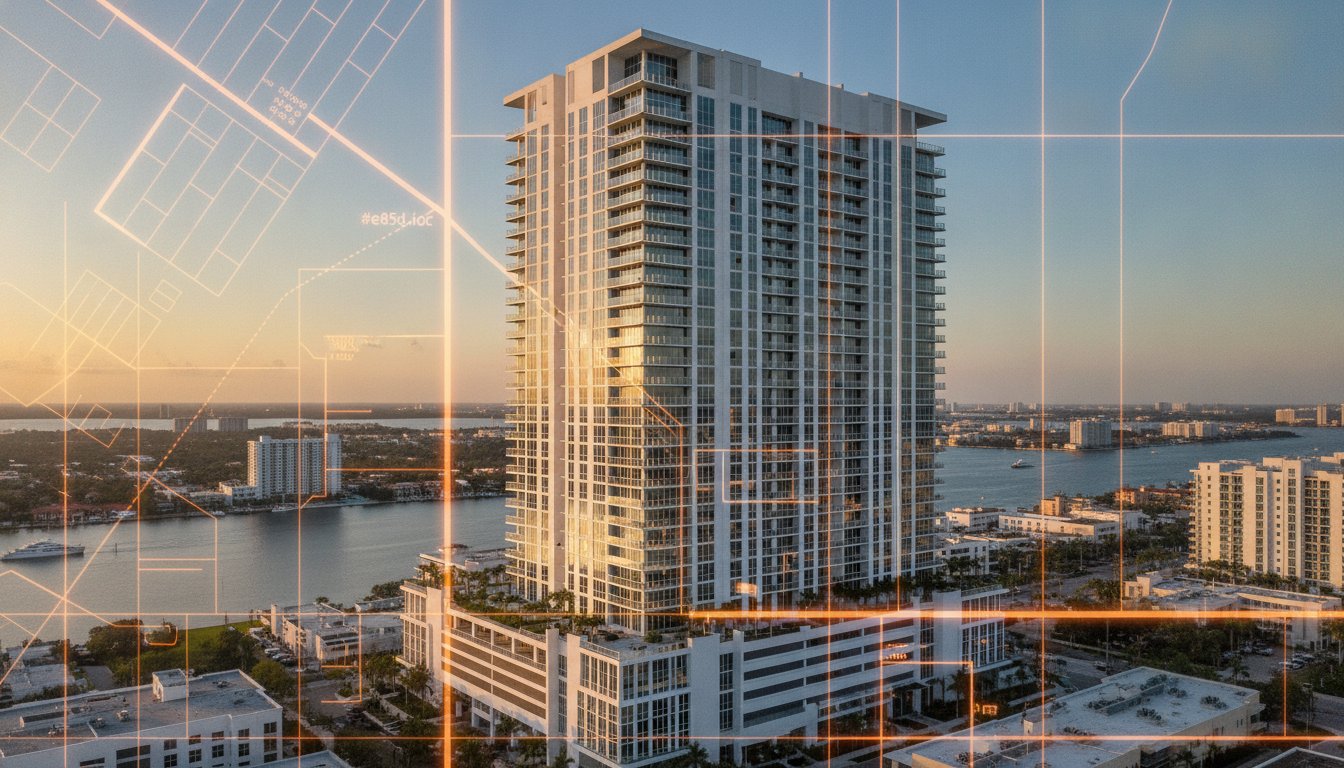
By 2026, a 14% discrepancy in sea-level rise mitigation data will be the leading cause of project insolvency for mid-market developers in Miami-Dade. You’ve likely found that the regulatory processes in South Florida have transitioned from predictable workflows into opaque, multi-layered hurdles that defy traditional scheduling. Executing a rigorous site feasibility study florida is the only objective method to quantify these variables before capital is committed. It’s the difference between a high-yield asset and a project stalled by unforeseen environmental mandates.
This guide offers a professional framework to master the technical complexities of the Florida landscape while providing a clear go/no-go decision structure. You’ll learn how to utilize high-fidelity data to prevent change order fraud and ensure your project remains revenue-ready upon completion. We’ll analyze specific environmental cost drivers and the precise steps required to secure a stable path through the Broward and Miami-Dade permitting offices. This methodology ensures that every technical risk is identified, quantified, and mitigated before the first shovel hits the ground.
Key Takeaways
- Learn to implement a multi-disciplinary audit that identifies property development potential through the rigorous technical standards required for the 2026 Florida market cycle.
- Master the navigation of complex municipal overlays and environmental constraints by conducting a comprehensive site feasibility study florida to mitigate regulatory risks.
- Develop high-precision pro formas by aligning site-specific data with emerging market trends, moving beyond generalized averages toward realistic cost estimation.
- Establish a structured approach to regulatory compliance through strategic pre-application meetings and the verification of critical concurrency requirements for public infrastructure.
- Discover how to transform voluminous technical reports into actionable strategies while assembling a specialized team of architects and engineers to execute the project vision.
Why a Site Feasibility Study is the Foundation of Florida Real Estate Success
A site feasibility study florida represents a rigorous, multi-disciplinary audit designed to quantify a property’s actual development potential against its theoretical capacity. In the 2026 market, developers face a convergence of tightened lending standards and 15% higher insurance premiums compared to 2023 levels. This environment leaves zero margin for technical oversights. Success no longer relies on intuition; it demands a structured evaluation of environmental, legal, and logistical variables before capital is committed.
Skipping this phase often results in catastrophic financial delays. For example, several mixed-use projects in Miami-Dade County stalled in 2024 after failing to account for 40-year recertification requirements and unexpected utility capacity deficits that added $2.4 million to initial budgets. A professional feasibility study identifies these “deal-killers” during the due diligence period, ensuring that the developer’s pro forma aligns with physical and regulatory realities.
Identifying Latent Risks in South Florida Land
Surface-level appraisals rarely identify the invisible constraints that dictate a project’s ROI. In South Florida, these include complex riparian rights, utility easements, and restrictive covenants buried in decades-old deeds. A site feasibility study florida serves as the ultimate risk-mitigation tool for capital preservation by quantifying technical constraints before any equity is deployed. Relying on standard zoning maps isn’t enough when 2026 FEMA flood elevation changes can instantly reduce a site’s buildable footprint by 12% or more. Technical audits must evaluate the existing infrastructure’s ability to support increased density, as antiquated sewer systems in aging corridors often require developers to fund off-site improvements that aren’t visible during a simple walk-through.
The Owner’s Perspective vs. The Contractor’s Perspective
Distinguishing between a basic lot study and a strategic development feasibility is critical for long-term stability. A General Contractor (GC) often approaches feasibility through the lens of constructability, focusing on how to build the proposed structure. This perspective can lead to construction-heavy solutions that ignore broader financial or legal optimizations. In contrast, an independent analysis managed by an Owner’s Representative Miami specialist prioritizes the developer’s bottom line and risk profile.
- GC Bias: Focuses on immediate labor and material logistics.
- Strategic Feasibility: Analyzes long-term operational costs, tax incentives, and exit strategies.
- Third-Party Objectivity: Provides an unbiased filter that prevents “sunk cost” fallacies from driving bad investment decisions.
Effective 2026 development requires a partner who views the site through an engineering lens while maintaining a fiduciary responsibility to the owner. This ensures that every technical finding is translated into a direct impact on the project’s internal rate of return.
The Core Technical Pillars of a Florida Site Analysis
A rigorous site feasibility study florida requires a cold, analytical assessment of the physical and regulatory constraints that dictate a project’s terminal ROI. Developers can’t rely on historical data alone. The 2026 landscape demands a technical deep-dive into the Miami 21 code, where Transect Zones (T-zones) dictate everything from building height to the percentage of “green space” required on a lot. Navigating these municipal overlays involves more than a cursory glance at a map; it requires a precise calculation of floor area ratios (FAR) and “bonus” height programs that often come with significant financial contributions to city funds.
Environmental assessments have shifted from elective to mandatory for securing 2026 construction financing. A Phase I Environmental Site Assessment (ESA) must be paired with specific Florida-centric surveys. For instance, the presence of Gopher tortoises requires a state-mandated relocation permit from the FWC, a process that typically takes 90 days and costs upwards of $5,000 per permit, excluding the actual relocation fees. Similarly, wetland delineations must strictly adhere to the 1987 USACE Manual. If a site contains jurisdictional waters, the mitigation bank credit costs can exceed $100,000 per acre in high-demand basins.
Geotechnical engineering in South Florida faces the unique challenge of karst topography. The underlying Oolite limestone is porous and prone to hidden voids. A standard 150-foot boring profile isn’t just a suggestion; it’s a structural necessity. Foundations in these areas often require auger cast piles to reach stable strata, a factor that can increase the foundation budget by 18% compared to sand-based sites in the Panhandle.
Environmental Constraints Specific to the Atlantic Coast
FEMA’s 2026 Flood Insurance Rate Maps (FIRMs) have introduced stricter Base Flood Elevations (BFEs) that force developers to raise finished floor elevations significantly higher than in previous decades. Along the coast, salt-air corrosion is a primary driver of long-term maintenance costs. Specifying Grade 316 stainless steel or high-performance powder coatings is mandatory for longevity, even if it adds 22% to the initial metalwork budget. Miami-Dade’s “Resilience” requirements now mandate that new builds withstand 175 mph wind loads and incorporate onsite stormwater retention capable of handling a 100-year storm event without discharging into municipal systems.
Infrastructure Capacity and Impact Fees
Connecting to municipal grids in North Bay Village or Fort Lauderdale is no longer a simple tap-in. Many high-density corridors are operating at 95% utility capacity. Impact fees for water and sewer in these jurisdictions frequently exceed $15,000 per equivalent residential unit (ERU). A critical technical bottleneck in 2026 is the availability of medium-voltage transformers. Current supply chain data indicates lead times of 14 months for these units. If a transformer upgrade is required and isn’t identified during the feasibility phase, the project’s delivery date will inevitably slip. For developers requiring precise technical oversight of these power systems, engineering-led project management ensures these long-lead components are secured during the design phase rather than as an afterthought.

Economic Viability: Translating Site Data into a Robust Pro Forma
A successful development in 2026 requires more than optimistic projections; it demands a pro forma built on granular, site-specific data. The site feasibility study florida developers rely on must bridge the gap between architectural vision and fiscal reality. By 2026, market demand in Florida has shifted toward ultra-luxury residential and specialized hospitality, with absorption rates for Class A office space slowing by 12% compared to 2024 levels. Revenue modeling now necessitates a deep dive into local competitive sets to ensure that projected rents or sale prices align with the 4.2% annual appreciation seen in coastal submarkets. We don’t rely on broad market sentiment; we analyze the specific absorption capacity of the micro-market to define the project’s financial ceiling.
The Accuracy Gap: Why Preliminary Estimates Often Fail
Generic “square foot averages” are the primary catalyst for project failure. In Florida, subsurface conditions like limestone voids or high water tables frequently remain hidden until excavation begins. These oversights lead to 65% of all construction change orders in the state. A 5% error in feasibility can lead to a 20% budget overrun in the construction phase because of the compounding costs of mobilization and specialized remediation. A rigorous site feasibility study florida establishes a technical baseline that allows for fixed-price bidding rather than speculative estimates. This precision ensures that the engineering requirements for dewatering or deep foundations are integrated into the budget before the first shovel hits the ground.
Risk-Adjusted ROI in the 2026 Florida Market
Calculating ROI in 2026 requires accounting for the “Florida insurance tax.” Property insurance premiums for new high-rise developments have increased by 35% since 2022, directly impacting net operating income. Developers must also perform sensitivity analysis on two critical variables: a 100-basis-point fluctuation in interest rates and the 15% labor premium currently required to secure skilled trades in South Florida. The “Go/No-Go” threshold should be triggered by a minimum 18% Internal Rate of Return (IRR) to account for these volatilities. A 10% “unknown contingency” is no longer a suggestion; it’s a structural requirement for any project south of Orlando. This disciplined approach ensures that capital is only deployed when the technical data supports long-term stability.
Navigating the Regulatory Landscape: Miami-Dade, Broward, and Palm Beach Requirements
Regulatory compliance in South Florida isn’t a mere administrative hurdle; it’s a technical challenge that requires a structured, engineering-led approach. A site feasibility study florida provides the empirical data needed to navigate the conflicting codes of different municipalities. Developers must follow a precise sequence to ensure project viability and risk mitigation.
- Step 1: Conduct a pre-application meeting. Engaging with local planning departments early reveals unwritten departmental interpretations of the 2024 Florida Building Code.
- Step 2: Verify concurrency requirements. Florida’s Growth Management Act mandates that infrastructure, specifically traffic and public services, must be available to support new development.
- Step 3: Secure environmental clearances. This involves coordinating with the Florida Department of Environmental Protection (FDEP) for Environmental Resource Permits (ERP), especially for sites with potential wetland impacts.
- Step 4: Align with aesthetic and historic boards. Projects in districts like Miami Beach or Coral Gables require approval from the Board of Architects or Historic Preservation Boards, which can alter building envelopes.
- Step 5: Finalize the entitlement strategy. Secure all zoning variances and land-use amendments before committing to a full design team to avoid costly redesigns.
Local Nuances: Miami vs. Fort Lauderdale vs. West Palm Beach
Miami-Dade utilizes the Miami 21 code, a form-based system that prioritizes building massing and placement over traditional use-based zoning. This requires a different technical analysis than Broward County, where the South Florida Water Management District (SFWMD) mandates rigorous drainage calculations based on the 25-year 3-day storm event. In North Bay Village, waterfront developments face unique constraints under the 2023 updated Island Overlay District, which focuses on public access and sea-level rise resilience. These geographical variables dictate the maximum Floor Area Ratio (FAR) and total unit density.
The Permitting Bottleneck: Strategies for Acceleration
Identifying the critical path for permit approvals is the primary objective of the feasibility phase. In the City of Miami, where review cycles can exceed 180 days, land-use attorneys and local lobbyists provide the necessary navigation through the Technical Review Committee (TRC). A site feasibility study florida maps these timelines against the project’s financial milestones to prevent capital stagnation. For developers seeking to master the complex digital workflows and technical requirements of miami building permits, understanding the integration between feasibility findings and municipal approval processes is critical for maintaining project continuity.
Precision in the early stages prevents catastrophic delays during construction. Every day lost to a regulatory bottleneck represents a direct erosion of the project’s internal rate of return.
Beyond the Report: How an Owner’s Representative Executes Feasibility Findings
A 200-page technical document provides little value if it remains a static reference on a shelf. In the 2026 Florida market, the Owner’s Representative functions as the primary information filter, converting raw data into a tactical execution plan. This role involves distilling complex geotechnical, environmental, and jurisdictional findings into a critical path that dictates every subsequent decision. By identifying the 5% of data points that represent 95% of the project’s risk, we ensure the developer isn’t paralyzed by information overload.
Using the site feasibility study florida as a technical baseline, FALKE Atlantic establishes budget guardrails that protect against the industry’s most common pitfall: change order fraud. When a feasibility report identifies a high water table or specific soil compaction requirements, that data becomes the benchmark for all future bids. Contractors can’t claim “unforeseen conditions” when those conditions were documented on day one. This disciplined approach typically reduces contingency expenditures by 15% to 22% compared to projects managed without rigorous pre-construction oversight.
The transition from pre-construction to active development management requires a shift from analysis to accountability. We don’t just hand over a report; we manage the transition by ensuring the project’s design evolution remains tethered to the original feasibility constraints. This prevents “scope creep” where architectural ambitions begin to outpace the site’s physical or financial realities.
Strategic Vendor Selection Based on Site Needs
Generic RFPs lead to generic failures. If a site feasibility study florida reveals significant environmental constraints, such as protected scrub-jay habitats or complex littoral shelf requirements, the project demands a specific caliber of civil engineer. We use the study’s technical output to vet vendors, ensuring their portfolio matches the site’s unique challenges. This alignment guarantees that every third-party consultant operates with the owner’s financial objectives as their primary metric, rather than just fulfilling a standard scope of work.
- Selection of specialized engineers based on specific soil or drainage data.
- RFP processes that include feasibility findings to eliminate “bid padding.”
- Alignment of vendor contracts with the project’s long-term ROI goals.
FALKE Atlantic’s Disciplined Four-Phase Methodology
Our proprietary process integrates feasibility findings into Phase 1: Concept & Strategy. This ensures that the transition from pre-construction to active development management is seamless and data-driven. We maintain total financial control by validating every design choice against the initial feasibility constraints. To secure your project’s technical and financial foundation, consult with FALKE Atlantic for your Florida Site Feasibility Study and move beyond the report into disciplined execution.
By Phase 2, the data from your feasibility study is already baked into the procurement strategy, ensuring transparency from day one. We don’t rely on hope; we rely on engineering data and professional oversight to deliver stability in a volatile market. Implementing comprehensive pre-construction services miami ensures that every technical finding from the feasibility phase translates into actionable risk mitigation strategies throughout the development process.
Executing Technical Precision in Florida Real Estate Development
Success in the 2026 market demands a departure from speculative planning toward a model of engineering-led certainty. Implementing a disciplined four-phase methodology ensures that every technical variable, from sub-surface conditions to local municipal codes, aligns with your financial pro forma. We’ve applied these rigorous standards to high-profile assets like the Prada Design District, where professional oversight transformed complex site constraints into measurable investment stability. Navigating the specific regulatory frameworks of Miami-Dade, Broward, and Palm Beach requires this level of granular analysis to mitigate risk before capital is committed.
A comprehensive site feasibility study florida provides the data architecture necessary for informed decision-making and long-term asset performance. By integrating technical competence with local expertise, developers can secure their equity against the volatility of the construction landscape. We invite you to leverage our structural reliability and regional insight to ensure your next project stands on a foundation of verified data. Secure Your Investment with a Strategic Feasibility Consultation and move forward with the confidence that only professional engineering management provides.
Frequently Asked Questions
How much does a site feasibility study cost in Florida?
A comprehensive site feasibility study Florida typically costs between $15,000 and $55,000 for standard commercial developments. These figures vary based on the 15 technical disciplines involved, including geotechnical, environmental, and civil engineering assessments. For large scale industrial projects, developers should budget approximately 1% to 2% of the total projected construction cost to ensure all subsurface and regulatory risks are identified before capital deployment.
How long does a typical feasibility study take for a Miami commercial project?
A typical feasibility study for a Miami commercial project requires 45 to 90 days to complete. This timeline accounts for the 30 days usually needed for Phase I Environmental Site Assessments and the 20 days required for detailed land use and zoning analysis by municipal departments. Complex urban infill projects in Miami’s core often require the full 90 day window to synchronize utility capacity letters and traffic impact studies with current 2026 density requirements.
Can I use a feasibility study to secure construction financing?
You can and must use a feasibility study to secure construction financing from institutional lenders. Data from 2025 indicates that 85% of Tier 1 banks in Florida require a third party feasibility report before issuing a commitment letter. The study provides the empirical evidence of a project’s 1.25x debt service coverage ratio and technical viability; this reduces the lender’s perceived risk profile and can lead to more favorable interest rates.
What is the difference between a Phase I ESA and a full feasibility study?
A Phase I ESA is a specialized environmental report focusing on contamination, while a full site feasibility study Florida is a multi disciplinary roadmap covering 12 or more distinct areas of risk. While the Phase I ESA identifies Recognized Environmental Conditions, the feasibility study integrates those findings with zoning laws, infrastructure capacity, and financial modeling. Think of the ESA as a single diagnostic test and the feasibility study as a complete surgical plan for the development.
Do I need a feasibility study for a property I already own in Broward County?
You need a feasibility study even for owned property in Broward County to account for the 2026 updates to the Land Development Code and drainage requirements. Owning the land doesn’t exempt a developer from the 25% increase in stormwater retention mandates or the shifting transit oriented development incentives along the Brightline corridor. Conducting this study ensures your intended use remains the highest and best use under current regulatory and technical constraints.
What happens if the feasibility study returns a ‘No-Go’ result?
A ‘No-Go’ result serves as a critical stop loss mechanism that prevents the 100% loss of development capital on a non viable project. When a study identifies a fatal flaw, such as an unmitigatable 40% wetland coverage or insufficient utility capacity, the developer can pivot or exit the contract. This outcome typically saves a firm $500,000 to $2,000,000 in soft costs that would’ve been wasted during a failed permitting process.
How does sea-level rise impact site feasibility in 2026?
Sea-level rise impacts site feasibility in 2026 through mandatory 2 foot increases in finished floor elevations across coastal Florida zones. These adjustments, based on NOAA’s 2022 Intermediate-High projections, directly increase fill costs by 15% to 20% and complicate ADA accessibility design. Feasibility studies now include 30 year flood risk modeling to ensure the asset remains insurable and meets the stringent 2026 Florida Building Code requirements for resiliency.
Should I hire an architect or an Owner’s Rep to lead the feasibility study?
You should hire an Owner’s Rep to lead the feasibility study because they provide a neutral, 360 degree perspective that architects often lack. While an architect focuses on design and 3D space, an Owner’s Rep manages the 10 sub consultants and aligns their findings with the developer’s 15% internal rate of return targets. Statistics show that 70% of successful industrial developments in 2025 utilized Owner’s Reps to maintain objective oversight of the technical and financial data.