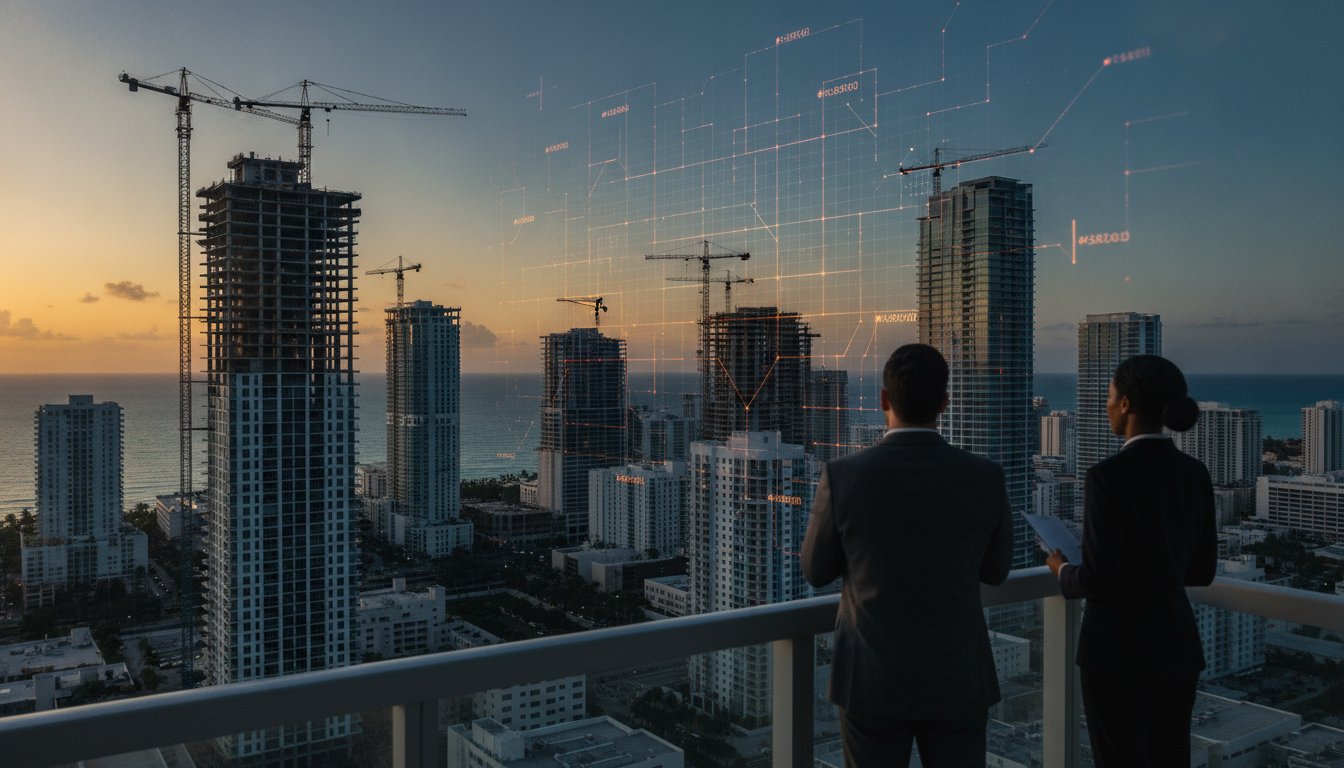
In the High Velocity Hurricane Zone, a project built strictly to code is not a resilient asset; it is merely a legally compliant one. With Florida’s material costs currently 12% above the national average and the 9th Edition of the Florida Building Code mandating 160 MPH wind-resistance for critical structures by late 2026, the margin for operational error has effectively vanished. Successfully managing construction in a hurricane-prone zone requires a shift in perspective, where structural integrity is treated as a core financial metric rather than a secondary engineering concern.
You likely recognize that unpredictable weather patterns and evolving ASCE 7-22 standards can quickly erode a project’s capitalization. We understand that maintaining a strict delivery schedule while navigating these technical complexities is a significant burden for any owner. This guide provides the strategic framework necessary to safeguard your investment through expert owner’s representation and rigorous project management. You’ll learn how to achieve full regulatory compliance, stabilize your financial exposure, and ensure your development reaches commissioning despite the inherent risks of the Florida coastline.
Key Takeaways
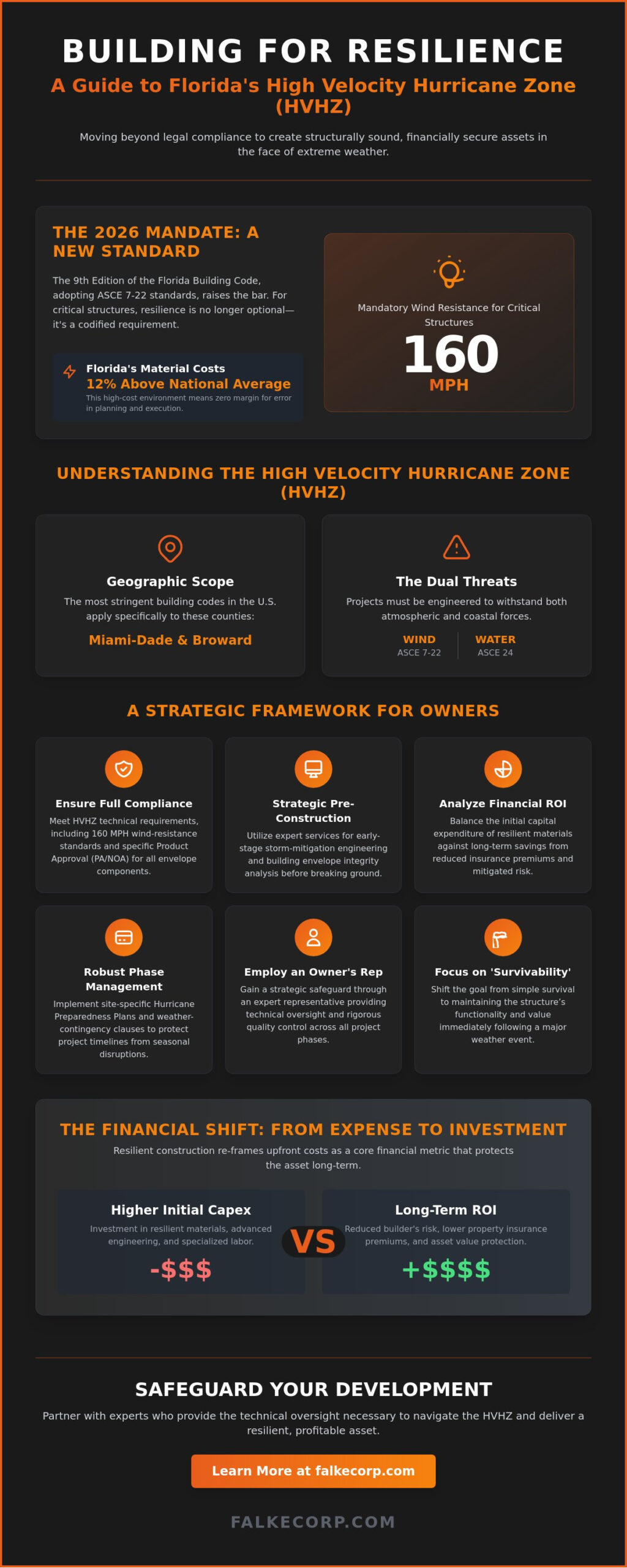
- Identify the technical requirements of the High Velocity Hurricane Zone (HVHZ) to ensure structural compliance with the 160 MPH wind-resistance standards established by the 2026 Florida Building Code.
- Utilize strategic pre-construction services for managing construction in a hurricane-prone zone, focusing on building envelope integrity and early-stage storm-mitigation engineering.
- Analyze the financial ROI of resilient materials by balancing initial capital expenditure against significant long-term reductions in builder’s risk and property insurance premiums.
- Develop robust construction phase management protocols, including site-specific Hurricane Preparedness Plans and weather-contingency clauses, to safeguard timelines from seasonal disruption.
- Employ an expert owner’s representative to provide technical oversight and maintain rigorous quality control across all phases of development in high-risk coastal environments.
Understanding the High Velocity Hurricane Zone (HVHZ) Framework
The High Velocity Hurricane Zone (HVHZ) represents the most stringent regulatory environment for structural engineering in the United States. Geographically confined to Miami-Dade and Broward Counties, this designation mandates that every component of the building envelope withstands extreme cyclical pressure and impact. For an owner, managing construction in a hurricane-prone zone within these boundaries requires an immediate departure from conventional development logic. By 2026, the transition from merely meeting minimum safety requirements to achieving long-term resilience has become the industry standard. This shift is driven by the 9th Edition of the Florida Building Code, which officially adopts ASCE 7-22 wind load standards. Site selection now functions as the first stage of risk mitigation, as the specific proximity to tidal waters dictates whether a structure must meet the 160 MPH wind-resistance threshold mandated by HB 911. This designation impacts the entire project lifecycle, starting with land acquisition. An owner must evaluate the High Velocity Hurricane Zone’s requirements before the first conceptual drawing is finalized. Failure to account for these standards during the acquisition phase can lead to unforeseen capital requirements that jeopardize the project’s feasibility. In 2026, the focus has moved beyond simple survival to ‘survivability,’ where the goal is to maintain the structure’s functionality immediately following a major weather event.
The Florida Building Code and HVHZ Standards
While the standard Florida Building Code provides a baseline for safety, HVHZ standards require specific Product Approval (PA) and Notice of Acceptance (NOA) documentation for every exterior element. These documents serve as forensic evidence that a material, such as a window assembly or roofing system, has passed rigorous laboratory testing for wind-borne debris. It’s vital to recognize that ‘hurricane-proof’ is often a misnomer in technical circles. Professional discourse instead focuses on Hurricane-Proof Building Techniques that prioritize resilience. This engineering philosophy ensures that even if a component sustains damage, the structural integrity of the primary building remains intact, preventing total catastrophic loss.
Geographic Vulnerabilities in South Florida
The complexity of managing construction in a hurricane-prone zone is compounded by the dual threats of wind and water. Coastal Miami faces acute storm surge risks that necessitate compliance with ASCE 24 standards, whereas inland Broward may prioritize wind-load distribution across expansive rooflines. As of 2026, foundational engineering must also account for rising water tables, often requiring finished floor elevations to exceed the Base Flood Elevation (BFE) by at least one foot of freeboard. Developers must differentiate between Flood Zone requirements, which govern hydrostatic pressure, and Wind Zone priorities, which dictate the hardening of the building’s vertical surfaces. Balancing these overlapping regulations is essential for long-term asset protection.
Strategic Pre-Construction: Engineering for Wind and Water
The pre-construction phase serves as the critical financial and technical filter for any development within the High Velocity Hurricane Zone. It’s the period where conceptual designs are stress-tested against the structural realities of South Florida’s climate. An owner’s primary objective during this stage involves curating a design team that possesses deep institutional knowledge of local storm-mitigation requirements. This selection process isn’t merely about architectural aesthetics; it requires engineers who understand how to translate a vision into a structure that meets the 160 MPH wind-resistance standards mandated by 2026 legislation. Engaging professional pre-construction services miami allows for early-stage site feasibility studies that identify potential structural constraints before they manifest as costly field orders. Managing construction in a hurricane-prone zone demands this level of foresight, ensuring that the project’s capitalization accounts for the specific engineering requirements of the building envelope from the outset.
Wind-Load Engineering and Building Envelope Integrity
Wind-load engineering requires a nuanced understanding of pressure distribution across the building’s surfaces. While low-rise structures focus on uplift forces at the roof-to-wall connections, high-rise developments must account for significant lateral loads and vortex shedding. The building envelope acts as the primary defense against internal pressure. If a single aperture is breached, the resulting pressure differential can lead to structural failure from the inside out. This is why impact ratings are segmented into large-missile and small-missile categories. Large-missile impact resistance is generally required for all openings below 30 feet, while higher elevations utilize small-missile glass to counter wind-borne debris at extreme altitudes. Precision in these calculations prevents the catastrophic budget overruns associated with late-stage redesigns.
Entitlements and Permitting in Coastal Jurisdictions
Navigating the entitlements process in coastal jurisdictions involves more than simple zoning approval. In the City of Miami and Miami-Dade County, developers must contend with the ‘substantial improvement’ rule, which triggers full code compliance for renovations exceeding 50% of the structure’s market value. This regulation can fundamentally alter the financial profile of a redevelopment project. Beyond zoning, maximizing the Floor Area Ratio (FAR) while adhering to ASCE 24 flood zone requirements requires meticulous planning. Managing construction in a hurricane-prone zone often necessitates elevating the structure’s base, which can impact height limitations and parking requirements. Professional pre-construction services ensure these regulatory hurdles are cleared early, preventing the bureaucratic delays that often derail project timelines during the height of hurricane season.
Material Resiliency and Supply Chain Economics
Asset protection in the High Velocity Hurricane Zone begins with the strategic selection of materials that exceed the minimum legal requirements. When managing construction in a hurricane-prone zone, an owner must weigh the initial capital expenditure of resilient materials against the long-term operational savings and asset valuation. While traditional reinforced concrete masonry units (CMU) remain the baseline for South Florida development, Insulated Concrete Forms (ICF) have gained traction as a superior alternative for owners seeking monolithic structural strength and enhanced thermal performance. The decision between these systems isn’t merely structural; it’s a financial one. ICF systems provide a more robust building envelope that can withstand extreme cyclical pressures while reducing energy consumption, a critical factor given that Florida’s material costs currently sit 12% above the national average. Beyond the primary structure, salt-spray mitigation is essential for coastal properties, where the corrosive environment can degrade inferior metals in a matter of months. Future-proofing an asset for 2026 climate standards involves selecting materials like 316-grade stainless steel or high-performance polymers for all exterior fasteners and mechanical supports.
Selecting the Building Envelope Components
Roofing systems are the most vulnerable point of failure during a high-wind event. Standing seam metal roofs are frequently preferred in the HVHZ due to their superior uplift resistance and longevity, though concrete tiles remain a viable option when properly secured with reinforced adhesive systems. The evolution of impact-resistant glazing has reached a point where energy efficiency and storm protection are no longer mutually exclusive. Modern laminated glass assemblies incorporate low-E coatings that reduce solar heat gain while meeting large-missile impact standards. Investing in these hurricane-rated systems isn’t just about safety. These choices can qualify an asset for wind mitigation insurance credits, which often save between 20% and 45% on annual premiums. Don’t overlook the role of high-grade sealants and waterproofing membranes. These hidden components prevent the water intrusion that often causes more financial damage than the wind itself.
Procurement and Supply Chain Stability
The economics of South Florida construction are heavily influenced by seasonal volatility. Managing construction in a hurricane-prone zone involves navigating the ‘Storm Season Surcharge,’ where material prices and shipping costs can spike as hurricane activity increases. In 2026, the construction industry continues to face wage pressure and material price fluctuations, making early procurement of long-lead items like impact windows and standby generators a necessity. Securing these components during the pre-construction phase prevents weather-related delays from cascading through the project timeline. Diversifying your vendor list is another strategic safeguard. It ensures that if a regional storm disrupts a local supplier’s operations, the project maintains access to the necessary resources through secondary channels, keeping the delivery schedule intact.
Operational Management: Navigating Hurricane Season
Operational success during the Atlantic hurricane season hinges on the transition from static engineering to dynamic site management. Managing construction in a hurricane-prone zone is an exercise in tactical discipline that peaks between June and November. Owners must mandate a comprehensive Hurricane Preparedness Plan (HPP) as a non-negotiable component of their construction phase management florida strategy. This plan isn’t a generic safety manual; it’s a site-specific operational guide that dictates precisely when and how the job site will be hardened against a named storm. In 2026, with NOAA forecasting between 8 and 14 named storms, the margin for operational complacency is non-existent. The owner’s representative plays a vital role here, verifying that the general contractor’s site-securing protocols are not only documented but actively practiced before a threat materializes.
The 72-Hour Site Securing Protocol
The protocol begins 72 hours before anticipated landfall, triggered by National Hurricane Center advisories. Loose materials, including formwork, plywood, and debris, must be cleared or mechanically fastened to prevent them from becoming wind-borne projectiles. Tower cranes are set to weathervane mode to allow them to rotate freely with the wind, reducing structural stress. Scaffolding mesh is removed to lower the wind-load profile of the temporary structures. Additionally, temporary power systems and water pumps are inspected to ensure the site remains dewatered during torrential rains. Clear communication chains are established, identifying the personnel responsible for the final site walkthrough before municipal evacuation orders take effect.
Managing Schedule and Budget Contingencies
A resilient project schedule includes a ‘weather buffer’ that accounts for the historical probability of work stoppages. Managing construction in a hurricane-prone zone requires integrating specific weather-contingency clauses into the prime contract to prevent disputes over delay claims. Force Majeure clauses must be precisely defined to protect the owner from unfair acceleration costs while ensuring the contractor remains accountable for site-securing duties. Tracking the financial impact is equally critical. With builder’s risk insurance typically costing 1% to 4% of the total project value, accurate post-storm documentation is the only way to facilitate rapid insurance recovery and minimize capital loss. Rapid response teams should be pre-contracted to perform damage assessments immediately after the site is deemed safe for re-entry.
Ensure your project remains on schedule despite seasonal risks by engaging our professional construction phase management services today.
The Owner’s Representative: Your Strategic Safeguard
The complexity of managing construction in a hurricane-prone zone necessitates a level of technical oversight that exceeds the standard project management scope. For remote or non-technical owners, an Owner’s representative Miami acts as the primary fiduciary safeguard, ensuring that the design and construction teams maintain a singular focus on risk mitigation. This role is fundamental in bridging the inherent communication gap between the architect’s vision and the general contractor’s execution. Without this intermediary, technical nuances regarding HVHZ compliance or wind-load distribution can be lost in translation, leading to latent defects that only surface during a major weather event. Financial oversight is equally critical; the representative audits all storm-mitigation change orders to ensure they’re legitimate and reflect current 2026 market rates. The FALKE Atlantic Corporation approach utilizes a disciplined four-phase methodology that provides a structured framework, guiding the project from initial site feasibility through final close-out, ensuring every decision is filtered through the lens of storm-prone zone stability.
Mitigating Risk Through Professional Oversight
Professional oversight extends into the granular details of insurance and compliance. An owner’s representative reviews builder’s risk and windstorm policies to confirm that coverage limits align with the 1% to 4% project value benchmarks typical for South Florida. They perform rigorous audits of contractor safety plans and HVHZ documentation, verifying that all Product Approvals and Notices of Acceptance (NOA) are current and correctly applied. This level of scrutiny is essential for warranty validation. If impact-resistant glazing or roofing systems aren’t installed precisely to manufacturer and code specifications, the resulting failure could void the very warranties intended to protect the asset’s capitalization. We ensure that every structural connection is documented and verified before it’s enclosed, providing a layer of accountability that a general contractor may overlook in the rush to meet a milestone.
Protecting ROI and Asset Value
Building for resilience is a strategic investment that directly correlates with long-term asset valuation. Properties that exceed the 160 MPH wind-resistance standards are positioned as premium assets in the Florida market, often commanding higher resale values and lower long-term insurance premiums. Managing construction in a hurricane-prone zone concludes with a meticulous close-out process, where every hurricane-related permit is finalized and legally recorded. The commissioning phase is the final hurdle, where we ensure that all life-safety and storm-readiness systems, including backup generators and flood barriers, are fully operational. This ensures the owner receives a fully compliant, resilient structure that’s ready to withstand the atmospheric pressures of the Atlantic coast without compromising the project’s financial integrity.
Strategic Resilience as a Financial Imperative
Successfully managing construction in a hurricane-prone zone requires a departure from traditional development models toward a system where structural integrity and financial stability are inseparable. As the 9th Edition of the Florida Building Code takes effect in late 2026, the technical requirements for the High Velocity Hurricane Zone have reached a point where oversight is no longer optional. You’ve seen how early-stage engineering, material selection, and site-securing protocols form a comprehensive defense against both atmospheric and economic volatility. By prioritizing these resilient building practices, you aren’t just meeting a legal minimum; you’re securing the long-term valuation of your asset.
FALKE Atlantic Corporation provides the disciplined technical leadership necessary to navigate these complexities. With deep expertise in Miami-Dade and Broward HVHZ regulations and a proven track record serving high-net-worth and hospitality clients, we apply a rigorous four-phase project management methodology to every development. We ensure that your vision is realized to the highest professional standards, regardless of the seasonal risks. Secure your South Florida development with FALKE Atlantic Corporation’s expert representation. We look forward to ensuring your project’s stability and success.
Frequently Asked Questions
What is the High Velocity Hurricane Zone (HVHZ) and where does it apply?
The HVHZ comprises Miami-Dade and Broward Counties, representing the most stringent building standards in the United States. It applies to all new construction and significant renovations within these jurisdictions. Managing construction in a hurricane-prone zone requires adherence to specific testing protocols for wind-borne debris. These regulations ensure that the building envelope maintains its integrity during extreme pressure cycles, preventing structural failure from internal pressurization.
How much more does it cost to build to HVHZ standards compared to standard codes?
Construction costs for hurricane-resilient structures in Florida typically range from $250 to $500 per square foot, depending on the complexity of the engineering. While Florida’s material costs are approximately 12% above the national average, these expenses are offset by long-term asset protection. Owners must account for the specific costs of reinforced concrete masonry and impact-resistant assemblies during the initial capitalization phase to avoid budget volatility during development.
Can an Owner’s Representative help lower my insurance premiums?
An owner’s representative facilitates significant insurance savings by ensuring the project qualifies for maximum wind mitigation credits. These credits can reduce annual premiums by 20% to 45% when all hurricane-rated windows and roof-to-wall connections are properly documented. By providing rigorous oversight during installation, the representative ensures that all components meet the precise standards required by carriers to issue these financial incentives.
What is the difference between impact-resistant glass and hurricane shutters for commercial buildings?
Impact-resistant glass provides a passive defense system that requires no manual activation, whereas hurricane shutters are active systems that must be deployed before a storm. For commercial assets, impact glass is often preferred for its dual benefits of continuous protection and improved energy efficiency through specialized coatings. While shutters may offer a lower initial cost, they lack the aesthetic and operational advantages of a fully hardened building envelope.
How do I protect my construction site if a hurricane is forecasted?
Site protection requires the execution of a 72-hour Hurricane Preparedness Plan that focuses on hardening the project against wind and water. This involves securing loose materials, setting tower cranes to weathervane mode, and verifying that dewatering pumps are operational. Managing construction in a hurricane-prone zone necessitates that the owner verifies these protocols are completed by the general contractor before municipal evacuation orders are issued.
Does the Florida Building Code change every year?
The Florida Building Code is updated on a three-year cycle to incorporate the latest advancements in structural engineering and resiliency. The 9th Edition is scheduled to take effect on December 31, 2026, and will officially adopt the ASCE 7-22 standard for wind load calculations. Owners must ensure their design teams are working from the most current edition to prevent costly permitting delays or structural non-compliance during the close-out phase.
Why should I hire an Owner’s Rep instead of just trusting my General Contractor?
An owner’s representative provides independent fiduciary oversight, whereas a general contractor is primarily focused on execution and profit margins. While the contractor manages the labor force, the representative ensures that all work complies with HVHZ standards and that hurricane-related change orders are legitimate. This strategic separation of duties protects the owner’s capital from being eroded by technical errors or unverified field expenses.
What are the essential pre-construction steps for building in Miami-Dade?
Essential pre-construction steps include a comprehensive site feasibility study and the verification of Notice of Acceptance (NOA) documents for all envelope materials. Owners must also analyze the property’s Base Flood Elevation (BFE) to ensure foundational engineering meets ASCE 24 requirements. Early coordination between the owner and design team ensures that the project clears the specific permitting hurdles unique to Miami-Dade’s coastal jurisdictions.